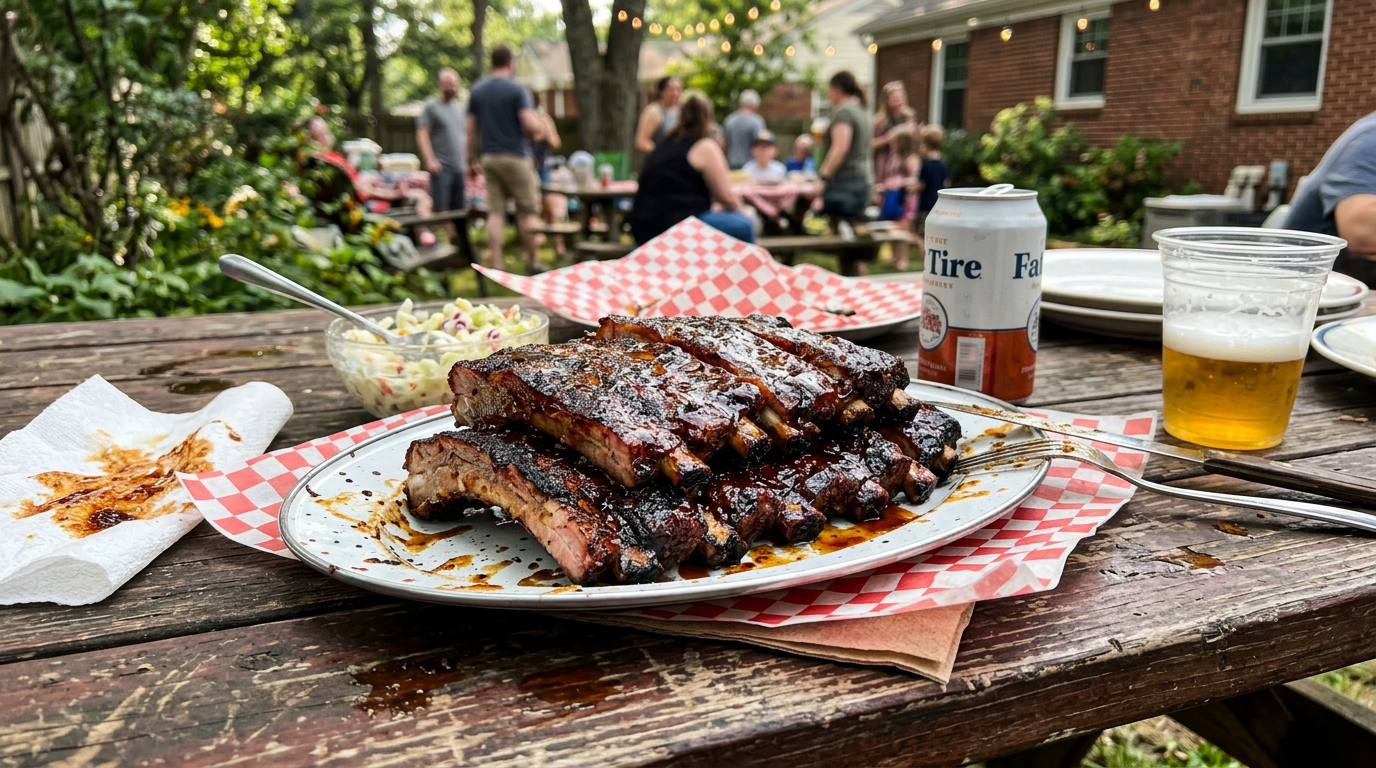
3-2-1 Spare Ribs: The Foolproof Crowd Pleaser
The Great Rib Debate
In the BBQ world, people argue about rib texture all the time. Competition cooks prefer a rib with “bite-through.” They want it tender, but still attached to the bone until you pull it away with your teeth. However, if you are cooking for a backyard crowd, they usually want ribs that literally fall off the bone.
The easiest way to get that ultra-tender result is the 3-2-1 Method.
What is 3-2-1?
It’s a ratio of hours based on a cooking temperature of 225°F for pork Spare Ribs. If you’re using Baby Backs, adjust to a 2-2-1 ratio.
Step 1: 3 Hours of Smoke
- Prep: Remove the silver skin from the back of the ribs. Apply a slather like yellow mustard and coat generously with a sweet BBQ rub.
- Smoke: Place the ribs meat-side up in a 225°F smoker. Use Hickory or Apple wood. Leave them alone for 3 hours. This is where you build the flavor and the bark.
Step 2: 2 Hours Wrapped (The Texas Crutch)
- Wrap: After 3 hours, pull the ribs. Lay out two sheets of heavy-duty aluminum foil.
- The Liquid: Place a few pats of butter, a drizzle of honey, and a splash of apple juice or cider vinegar on the foil.
- Meat Down: Place the ribs meat-side down into the liquid and seal the foil tightly.
- Cook: Return to the smoker for 2 hours. The trapped steam will break down the collagen fast. This makes the meat incredibly soft.
Step 3: 1 Hour Unwrapped
- Unwrap: Carefully remove the ribs from the foil. They will be very tender and might want to fall apart. Place them back on the smoker, meat-side up.
- Set the Bark: Cook for 30 to 45 minutes to let the surface firm up again after being steamed.
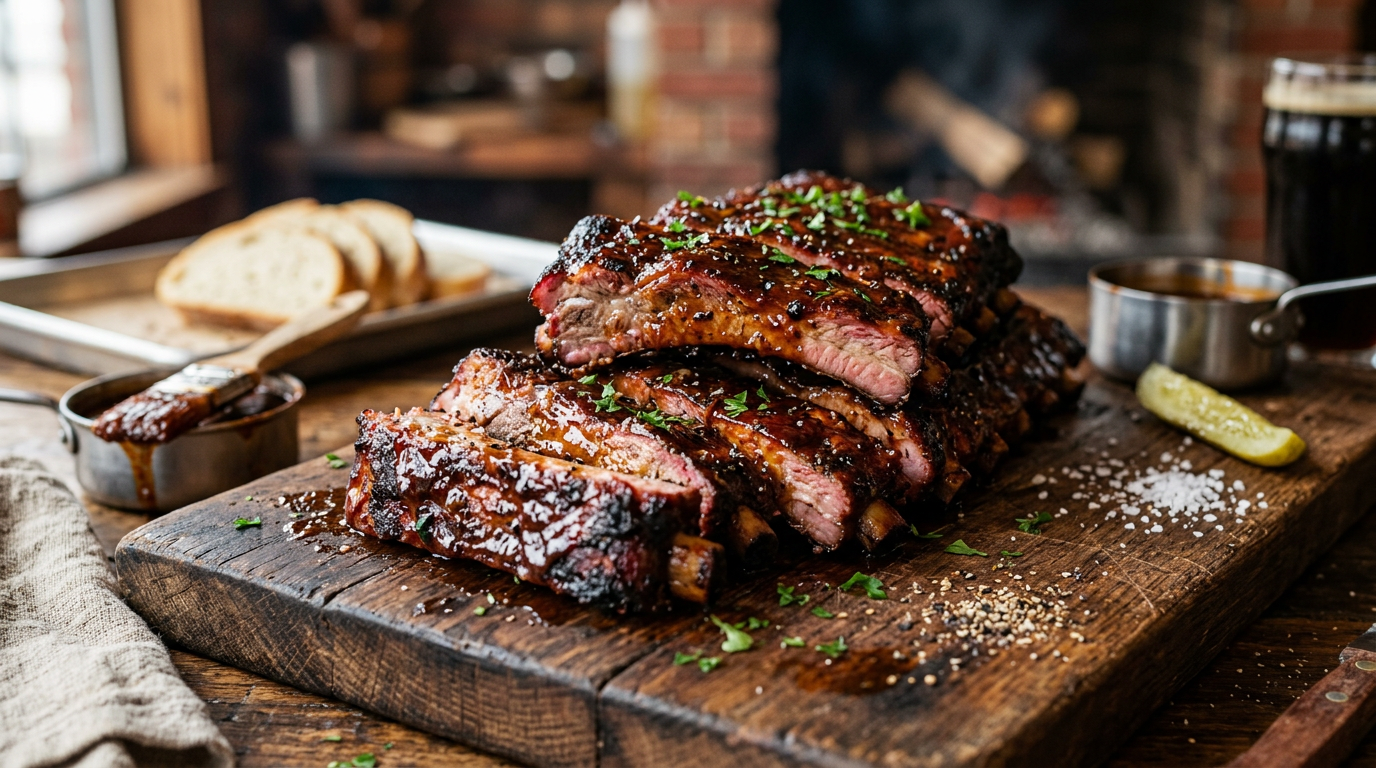
- Glaze: In the final 15 minutes, brush on your favorite BBQ sauce. The heat will cause the sugars in the sauce to caramelize. This creates that sticky, glossy finish.
Pull them off and let them rest for 10 minutes. Watch your guests devour them.
Keep the Fire Burning
The Overnight Pork Butt: A Lesson in Patience
The most forgiving cut for beginners. Learn how to manage a long-haul fire and get perfectly shreddable pulled pork.
Read GuideThe Poultry Brine Bible: Wet, Dry, and Why It Matters
Master the science of moisture retention. Learn when to use a wet brine for juiciness and when a dry brine is mandatory for crispy skin.
Read GuideThe Post Oak Bible: Master the Backbone of Central Texas BBQ
Why Post Oak is the ultimate 'Goldilocks' wood for brisket, how to source it, and the secrets to getting that perfect clean blue smoke.
Read Guide