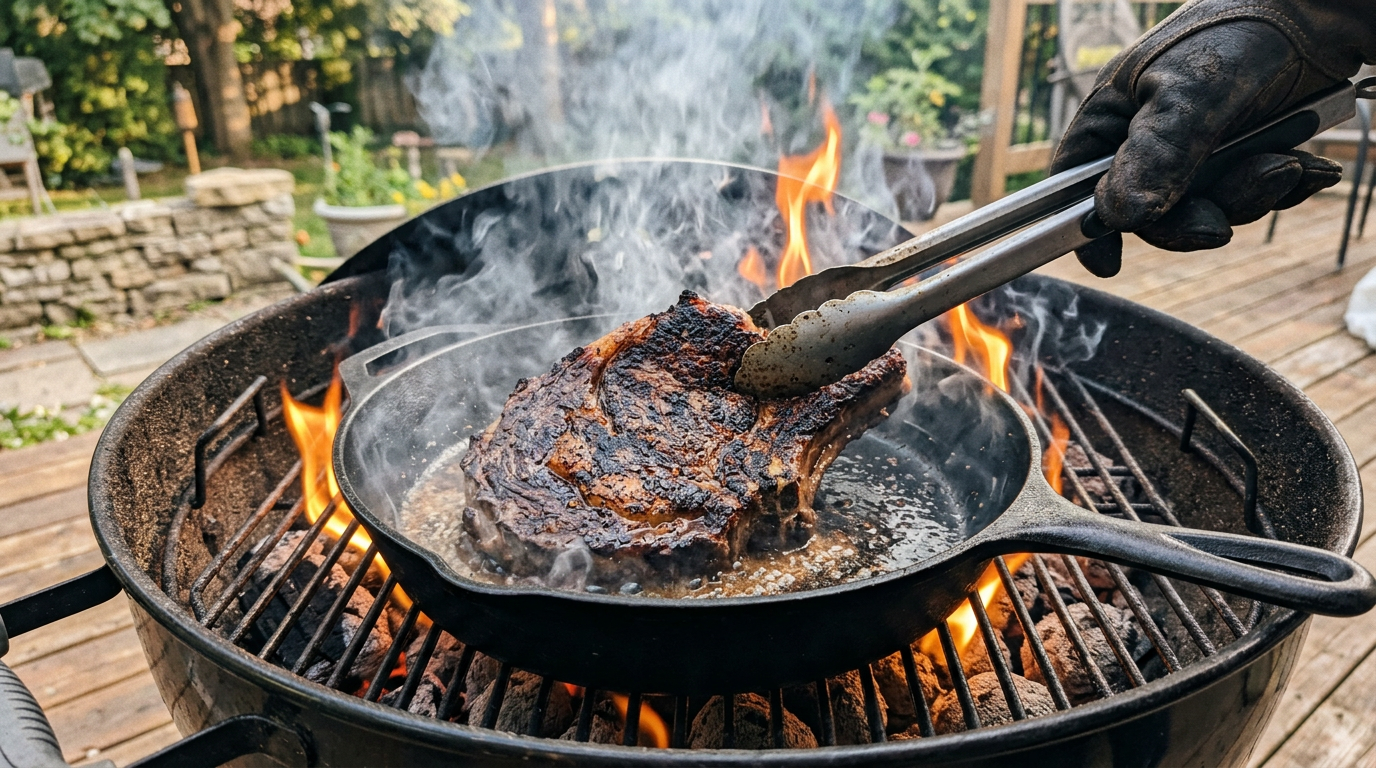
The Reverse Sear Ribeye: Forget the Gray Band
The Flaw of Traditional Grilling
We’ve all been taught to “sear the meat to lock in the juices.” Science has proven this false. But the myth persists. Traditional grilling—throwing a cold steak on a screaming hot fire—results in the dreaded “gray band.” That’s a thick ring of overcooked, tough meat surrounding a tiny center of medium-rare.
The solution? The Reverse Sear.
What is the Reverse Sear?
Instead of searing first, we flip the script. We cook the steak at a very low temperature until the center is almost at our target doneness. Then we finish it with a blazing fast, ultra-hot sear.
This method requires a thick steak. You need at least 1.5 to 2 inches thick. A standard supermarket cut is too thin. It will overcook before you can build a crust.
The Process
1. The Dry Brine (Crucial)
Salt your steak generously 24 hours in advance. Leave it uncovered on a wire rack in the fridge. This achieves two things:
- The salt penetrates deep into the muscle. This seasons the meat throughout.
- The surface of the steak dries out completely. This is essential for a fast, crusty sear. The Maillard Reaction cannot happen if surface moisture is boiling off.
2. The Low and Slow Phase
Set up your grill for two-zone cooking or use your smoker.
- Target ambient temperature: 225°F to 250°F.
- Place the steak on the indirect side. This means away from the coals.
- Add a chunk of Oak or Pecan wood for a kiss of smoke.
- Cook until the internal temperature reaches 115°F. That’s for a final medium-rare of 130°F to 135°F. This usually takes 45 to 60 minutes depending on thickness.
3. The Sear
Pull the steak off and let it rest for 10 minutes. While it rests, get your fire as hot as possible. Or heat a cast-iron skillet until it’s smoking.
- Sear the steak for no more than 60 to 90 seconds per side.
- Because the surface is dry and the fat is already warm and rendering, a deep, mahogany crust will form almost instantly.
Slice and serve immediately. Because you brought the meat up to temperature so slowly, the traditional long rest is not required. You will have edge-to-edge perfection every time.
Keep the Fire Burning
Mastering the Reverse-Seared Tomahawk
How to handle the massive bone, manage heat zones, and get the real visual showstopper.
Read GuideTacos al Carbón: The Authentic South Texas Fajita Guide
Forget the sizzle platters. This is the real deal. Mesquite-seared skirt steak, acid-bright marinades, and the secret to the perfect against-the-grain slice.
Read GuideSmoked Chuck Roast: The 'Poor Man's Brisket' That’s Rich in Flavor
Big B shows you how to take a humble chuck roast and turn it into tender, smoky beef that gives brisket a run for its money.
Read Guide