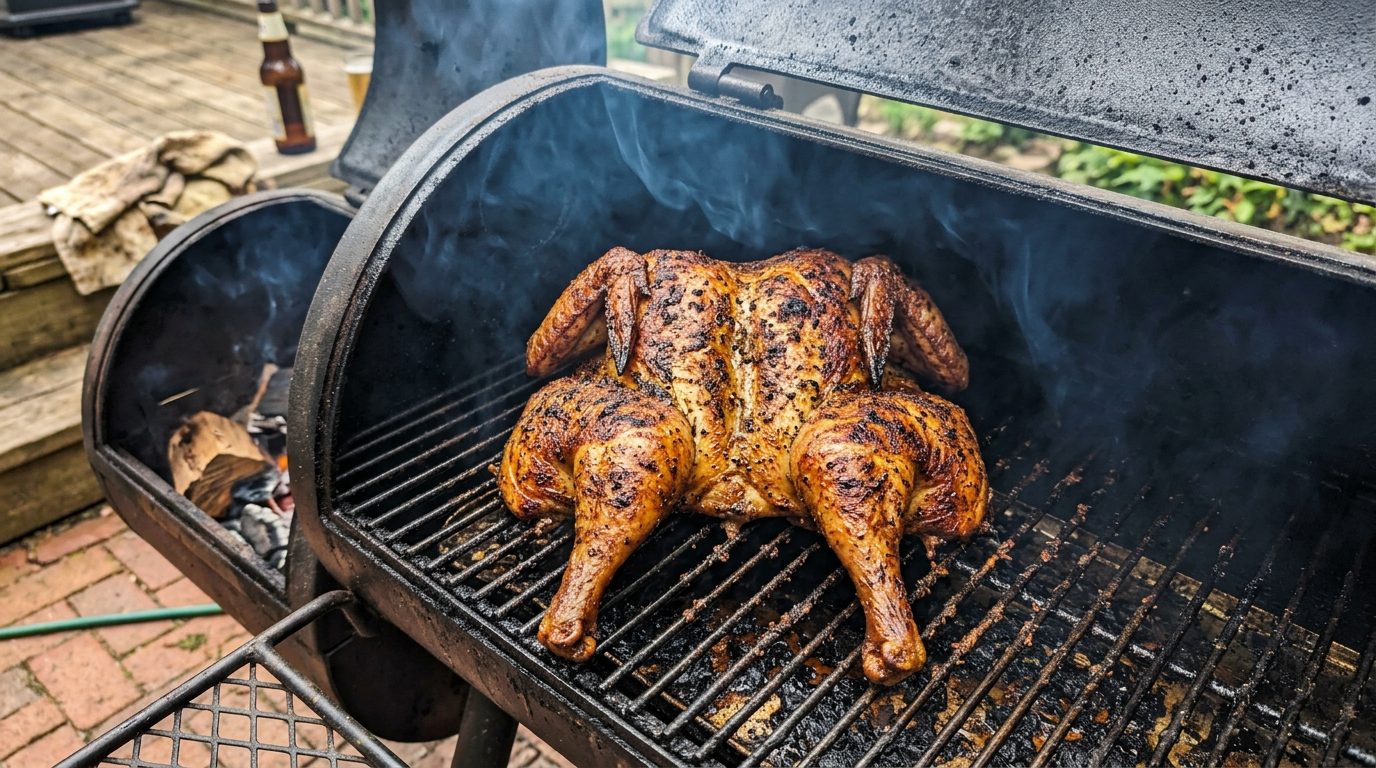
Spatchcock Smoked Chicken: No More Rubbery Skin
The Problem with Whole Birds
Smoking a whole chicken traditionally has its issues. By the time the dark meat in the thighs reaches a safe and tender temperature (175°F), the white meat in the breast is often overcooked and dry. Furthermore, “Low and Slow” cooking temperatures do not render chicken fat well. This results in skin that is rubbery and inedible.
The solution is geometry: The Spatchcock.
How to Spatchcock
Spatchcocking (or butterflying) simply means removing the backbone so the bird lays flat.
- Place the chicken breast-side down on a cutting board.
- Using heavy-duty poultry shears, cut along both sides of the spine from tail to neck. Remove the spine. Save it for stock!
- Flip the bird over. Press down firmly on the breastbone with the heel of your hand until you hear a crack and the bird lays completely flat.
Why it Works
Flattening the bird exposes the legs and thighs to more ambient heat. This allows them to cook faster and finish at the same time as the breast. It also creates a flat, uniform surface for your dry rub.
Achieving Crispy Skin
To defeat rubbery skin, you must attack moisture.
- Dry Brine: Salt the bird heavily and leave it uncovered in the fridge for 24 hours. The cold circulating air will dry out the skin like parchment paper.
- Baking Powder: Add a small amount of aluminum-free baking powder to your rub. It changes the pH of the skin and helps it brown.
- Higher Heat: Do not smoke chicken at 225°F. Smoke it at 300°F to 325°F. Chicken is lean. It doesn’t have the tough collagen of a brisket. It doesn’t need “Low and Slow.” The higher heat is required to crisp the skin.
Use a mild wood like Apple or Cherry. Pull the bird when the breast hits 160°F. Carryover cooking will bring it to the safe 165°F mark. The thighs should be at 175°F. You will have juicy meat and skin that crackles when you bite it.
Keep the Fire Burning
The Poultry Brine Bible: Wet, Dry, and Why It Matters
Master the science of moisture retention. Learn when to use a wet brine for juiciness and when a dry brine is mandatory for crispy skin.
Read GuideSmoked Turkey with Crispy Skin: The High-Heat 'Dry Brine' Method
Stop settling for rubbery turkey skin. Big B shows you the secrets of dry-brining, air-drying, and the critical 'high-heat finish' for the perfect bird.
Read Guide