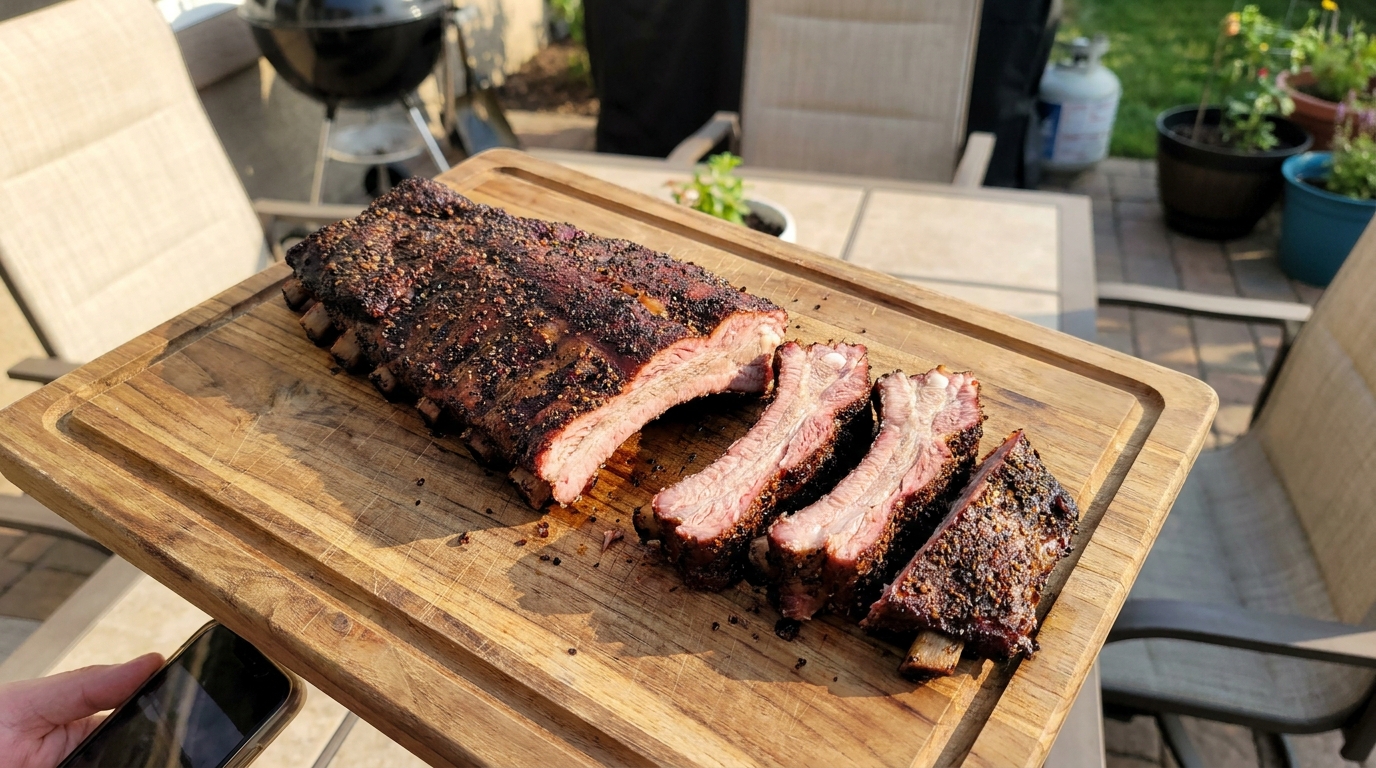
Texas Style Spare Ribs: No Wrap, Heavy Pepper
Big B’s Quick Hits (TL;DR)
- Ditch the sweet glazes: Texas ribs rely on pork flavor, kosher salt, and coarse black pepper, not brown sugar and squeeze-bottle honey.
- No wrapping required: Skip the foil wrap entirely. Leaving the ribs open on the grate lets the bark build a dry, peppery, crunchy texture.
- Watch the temperature: Keep the smoker running steady between 225°F (107°C) and 250°F (121°C). Clean smoke is essential since the meat is exposed the whole time.
- Use the bend test: Wrap-free ribs do not fall off the bone. They are done when the rack bends easily and the surface starts to crack when lifted from the center.
Introduction
If you have only eaten ribs cooked on a strict clock, you probably know the fall-off-the-bone style. Those ribs are usually steamed in foil with butter and honey, then glazed with thick, sweet sauce. They are tasty, but the steaming process mushies the meat, and the sugar covers up the actual pork flavor.
Texas-style spare ribs are different. We do not hide the meat under sugar. We use a simple salt and pepper seasoning, smoke them wide open on the grate without wrapping, and burn clean wood like Post Oak. The result is a savory, peppery rack with a crunchy bark and a clean bite-through texture. When you take a bite, the meat stays on the bone, leaving a clean crescent mark.
If you prefer the sweet, wrapped backyard classic instead, you can find the walkthrough in 3-2-1 Spare Ribs.
The Pure Pork and Pepper Approach
In the wider world of barbecue, pork ribs are often treated as a canvas for sweet rubs and thick sauces. Most backyard cooks are taught that success means meat falling clean off the bone at the slightest touch. While this style is popular, it is achieved by steaming the meat in foil, which breaks down the pork until it loses its natural muscle texture and tastes mostly of brown sugar and vinegar.
Texas-style ribs offer a stark contrast, prioritizing the deep, natural flavor of the pork and clean wood smoke. We trade the sugar-laden rubs for a simple combination of kosher salt and coarse black pepper, creating a savory profile that allows the quality of the meat to stand out. The texture is tender but bite-through: when you take a bite, the meat detaches cleanly from the bone only where your teeth make contact.
Because the ribs remain unwrapped throughout the cook, they form a robust, dry bark that sweet ribs can never match. The coarse black pepper acts as a smoke magnet, catching the wood particles and locking them into the rendering pork fat. This builds a textured, savory crust that provides a satisfying crunch with every single bite.
Trimming to St. Louis Cut
Pork spare ribs come from the belly area of the hog, which means they contain a lot of extra cartilage, fat, and bone pieces that do not exist on baby back ribs. A full, untrimmed rack of spare ribs is highly irregular in shape, featuring a wide, tapering end and a thick strip of cartilage tips along the top. Trimming this cut is essential; otherwise, the thin sections will burn to a crisp before the thick cartilage ends are even warm.
To trim the ribs, lay the rack bone-side up on a large cutting board. Feel along the top edge of the straight rib bones until you locate the soft joint where they meet the cartilage breastbone. Slice your boning knife straight through this joint across the entire length of the rack, removing the triangular tips and leaving behind a neat, uniform rectangle of bones known as a St. Louis cut.
Once the rack is shaped, remove the tough silver skin membrane from the bone side. Slide the tip of a butter knife under the membrane over one of the middle bones, lift it up to start a flap, and use a paper towel to grip the slippery skin and peel it off in one pull. Trim away any small, loose hanging flaps of meat or fat from the edges, saving these trimmings to smoke separately for pit beans.
Dalmatian Rub on Pork
While pork is traditionally paired with sweet rubs containing brown sugar, paprika, and garlic, Texas-style ribs stick to the simple Dalmatian blend. This combination consists of equal parts coarse kosher salt and coarse black pepper by volume. The lack of sugar means the ribs will not burn if your smoker temperature spikes, allowing you to focus entirely on fire management.
The specific grind of your black pepper is critical to building a quality bark. Do not use fine table pepper, which will dissolve into the meat and create an overwhelming, muddy heat. Instead, use 16-mesh coarse black pepper, which sits on the surface of the pork, providing a rough, gravelly texture that catches the wood smoke and allows it to color the ribs.
To apply the rub, coat the rack lightly on all sides, starting with the bone side first so the curved meat side is not disturbed. Let the seasoned ribs sit on the counter for fifteen minutes before they hit the cooker. The salt will draw out a small amount of moisture, creating a tacky surface that holds the pepper grinds firmly in place throughout the long smoke.
The Steady Smoke (No Wrap)
Prepare your smoker to run steady between 225°F (107°C) and 250°F (121°C). Place the St. Louis cut ribs meat-side up on the middle grate of the cooking chamber. For fuel, use seasoned Post Oak splits, which burn clean and provide a mild, well-rounded smoke profile that will not overpower the pork over a long cook.
Because we are skipping the wrap phase, fire management is critical. Steaming ribs in foil is a shortcut that softens the meat quickly but ruins the texture of the bark. Leaving the ribs exposed on the grate for the entire 5 to 6 hours allows the bark to dry and harden, but it requires clean, blue smoke to avoid a bitter taste, as detailed in foil vs butcher paper.
After about three hours of cooking, the surface of the ribs will begin to look dry and the bark will be set. To prevent the edges from burning, spray the ribs every 45 minutes with a mixture of equal parts apple cider vinegar and water. The acidity of the vinegar reacts with the pork fat, tenderizing the surface while keeping the meat moist.
Big B’s Take: Resist the temptation to open the smoker lid every fifteen minutes to check on your ribs. Every time you open the cooker, you dump the heat and dry out the chamber air, extending your cook time. Spritz quickly, close the door immediately, and let the wood fire do the work.
The Bend Test: Checking for Doneness
Since we are not steaming these ribs to mush, we cannot rely on the bones pulling out cleanly to tell us when the cook is finished. Instead, we check the flexibility of the rack using the bend test. Slide your metal tongs under the middle of the rack and lift it up: the ribs should bend easily in a smooth arch, and the peppery bark on the meat-side should start to crack open slightly under its own weight.
You can verify the bend test with a toothpick. Push a toothpick into the thickest part of the meat between the rib bones. The toothpick should slide in and out with zero resistance, feeling like it is sliding into warm butter. You should also see the meat pulling back from the ends of the bones by about a quarter of an inch (6 mm).
Once the ribs pass both tests, pull them from the cooker and let them rest on a cutting board for fifteen minutes before you slice. This rest allows the meat fibers to relax and reabsorb the hot juices. Slice down between the bones in clean, single strokes, and serve them warm with a side of pepper-forward barbecue sauce if you like, though they do not need it.
Keep the fire steady and the drinks cold. I’ll see you at the pit. - Big B
Keep the Fire Burning
3-2-1 Spare Ribs: The Foolproof Crowd Pleaser
Smoke, wrap, and glaze spare ribs on a simple 3-2-1 clock for tender backyard ribs.
Read GuideThe Great Wrap Debate: Foil vs. Butcher Paper
Big B breaks down the difference between the Texas Crutch and peach butcher paper so you can decide which one is right for your next long cook.
Read GuideThe Overnight Pork Butt: A Lesson in Patience
Manage a long-haul fire on pork shoulder and get shreddable pulled pork without babysitting every minute.
Read Guide