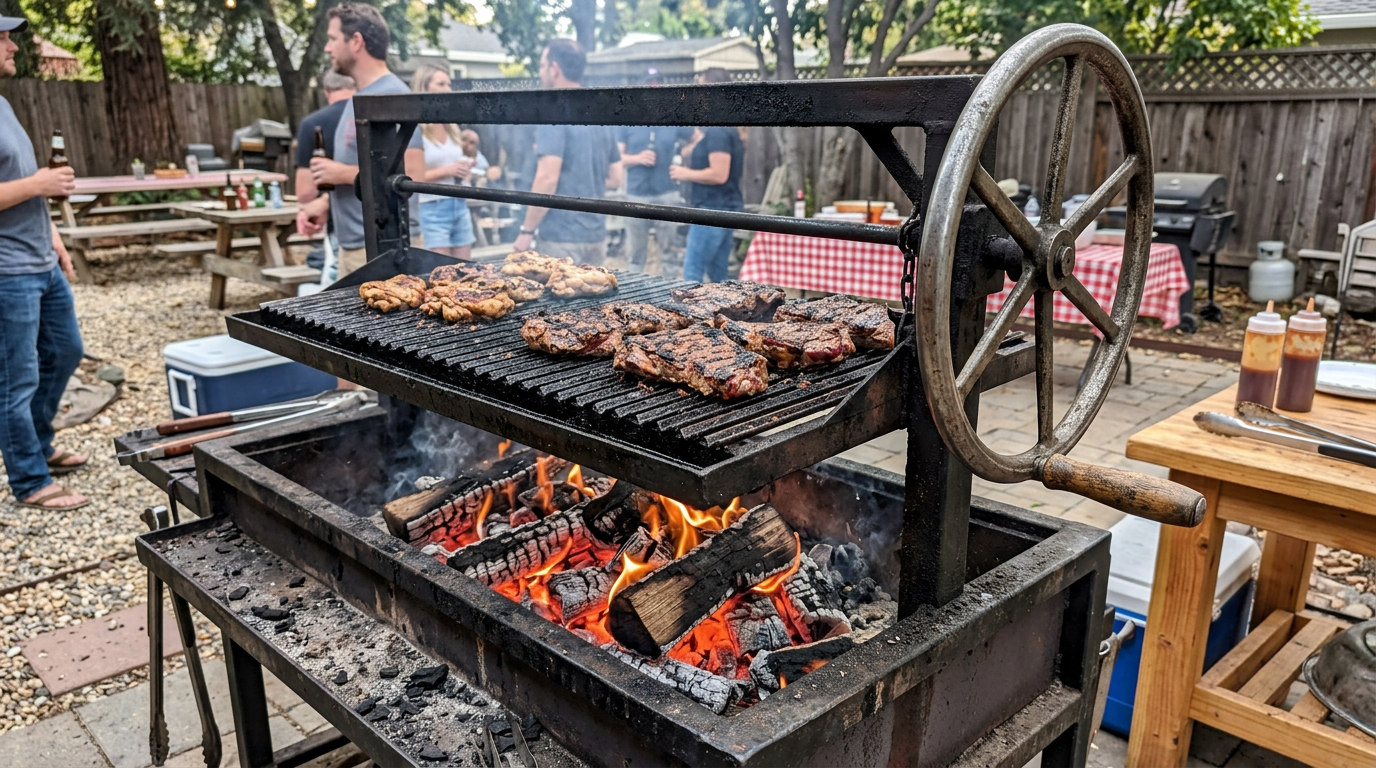
The Central Coast Classic: How to Use a Santa Maria Grill
The West Coast’s BBQ Legacy
While the South focuses on the enclosed smoke of the offset or the pellet grill, California has its own ancient tradition. They use the Santa Maria Grill. This is open-pit BBQ at its finest. It goes back to the 19th-century rancheros. This method relies on direct heat, a specific wood, and a mechanical design that gives you real control over the fire.
1. Anatomy of the “Wheel” Grill
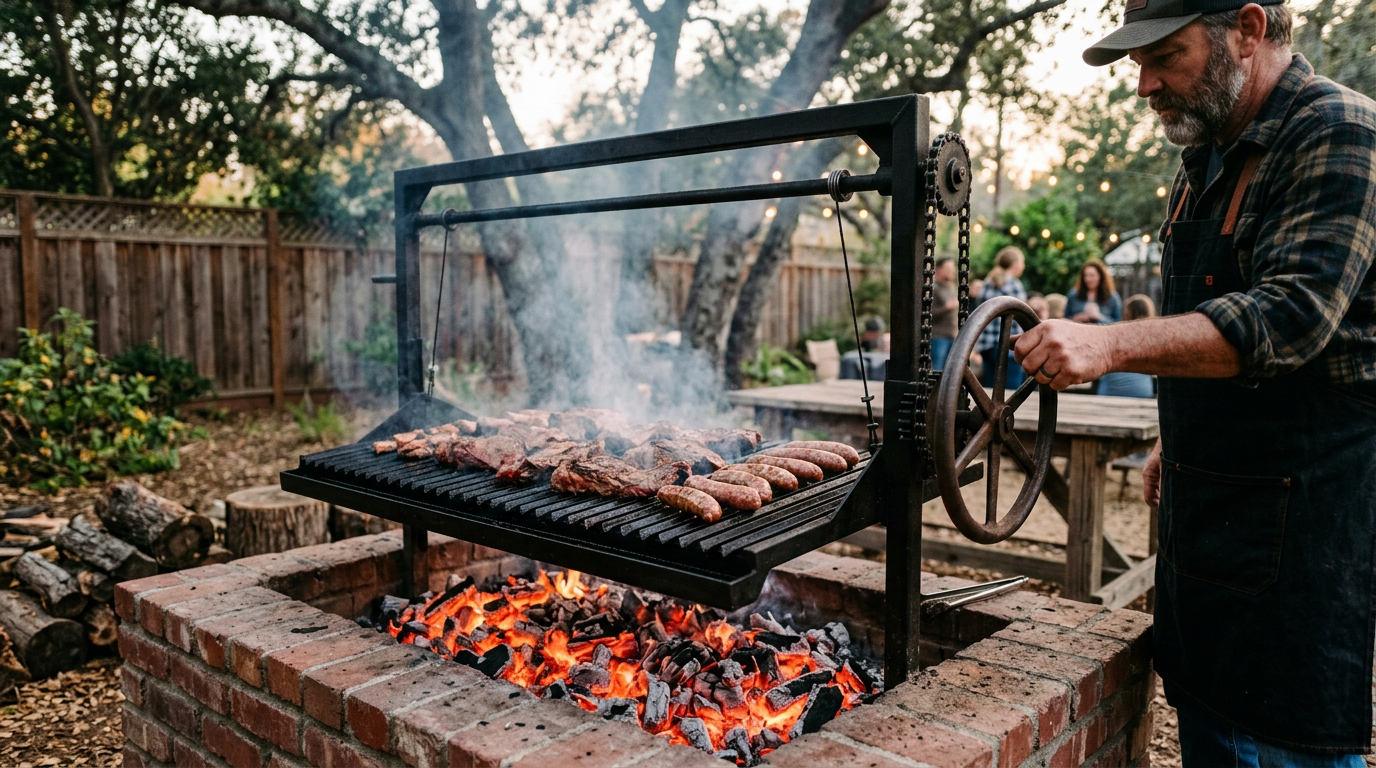
The defining feature of a Santa Maria grill is the Adjustable Grate.
- The Wheel: A large hand-cranked wheel on the side of the grill.
- The Cables: Steel cables that wind around an axle. They raise and lower the heavy iron grate. This lets you micromanage the temperature by moving the meat away from the coals.
- The Firebox: A deep, open rectangular box where the wood is burned down into a bed of glowing coals. It usually has no lid. You’re cooking with radiant heat, not convection.
2. The Fuel: Red Oak or Nothing
In Santa Maria, the wood is not optional. You must use Red Oak. Unlike Hickory or Mesquite, Red Oak provides a mild, clean smoke flavor. It won’t overpower the beef. It also burns very hot and stays as a stable coal bed for a long time.
Fire Management
- The Stack: Build a “log cabin” stack of Red Oak logs in the center of the firebox.
- The Burn Down: Let it burn down completely until you have a level bed of glowing, white-hot coals. This usually takes 45 to 60 minutes.
- The Coal Bed: Spread the coals out evenly using a fireplace poker. You want a depth of about 2 to 3 inches of glowing embers.
- No Flames: Avoid cooking over active, licking flames. Flames singe the meat. The radiant heat of the white-hot coals is where the real flavor happens.
3. Heat Control: The Vertical Strategy
This is the trick. On a standard grill, you control heat by opening vents or adjusting gas dials. On a Santa Maria grill, you move the meat.
- The Sear (Bottom Position): Lower the grate until it is just 2 to 3 inches above the coals. Place your seasoned Tri-Tip down for a hard, fast sear. Usually 4 to 5 minutes per side until a deep crust forms.
- The Roast (High Position): Once seared, crank the wheel to raise the grate 10 to 12 inches above the coals. This allows the meat to roast gently. It absorbs the mild oak smoke without burning the exterior.
- The “Flare-Up” Crank: If fat drippings cause a flare-up, don’t reach for a water spray. Just crank the wheel a few times to raise the meat until the flames die down.
4. The Iconic Santa Maria Tri-Tip
The Tri-Tip is the traditional cut for this grill. It is a triangular muscle from the bottom sirloin, famous for its rich marbling and distinct grain.
The Authentic Rub
The “Santa Maria Rub” is simple, allowing the flavor of the beef and the oak to shine:
- 1 part Salt
- 1 part Coarse Black Pepper
- 1 part Garlic Salt
The Slicing Secret
Tri-Tip is notorious for having a grain that changes direction mid-muscle. To ensure a tender bite, you must identify the grain before cooking and slice against the grain for the final service.
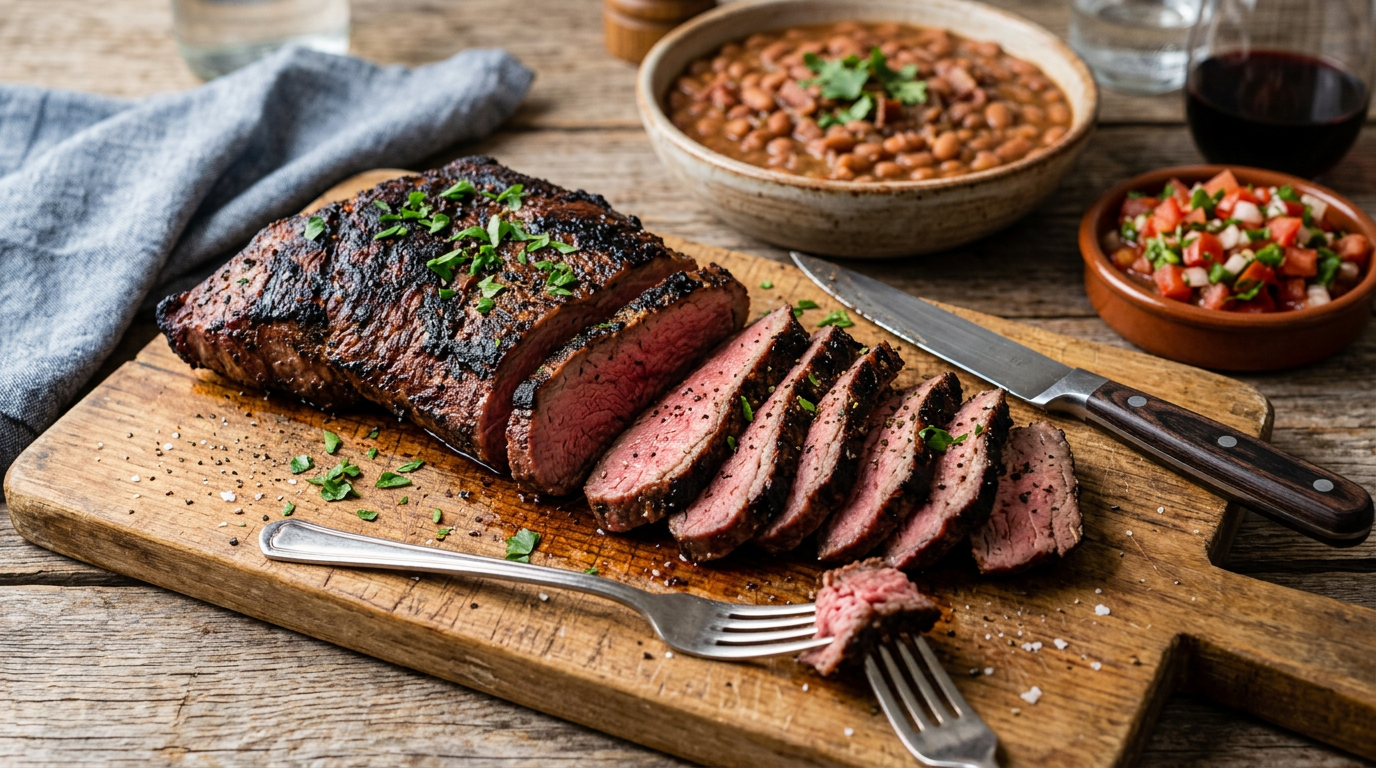
5. The Full Feast: Traditional Sides
A Santa Maria BBQ is never just about the meat. It is a specific, culturally protected meal that traditionally includes:
- Pinquito Beans: Small, pink, nutty beans grown in the Santa Maria valley, slow-cooked with bacon and spices.
- Fresh Salsa: A chunky, “pico de gallo” style salsa that provides acidity to cut through the beef fat.
- Grilled Garlic Bread: Slices of sourdough or French bread slathered in garlic butter and toasted directly on the iron grate.
6. Maintenance: Respect the Iron
Because these are open-pit grills, they are prone to rust if left in the elements.
- Season the Grate: Like a cast iron pan, the iron grate should be kept oily. After every cook, wipe it down with a bit of vegetable oil while it’s still warm.
- Cable Care: Regularly apply a food-safe lubricant to the lifting cables and the axle. This prevents binding and ensures the wheel turns with a satisfying, smooth “clink-clink-clink.”
The Santa Maria grill is a physical, engaging way to cook. It requires you to be at the pit, working the wheel, and watching the fire. But once you taste that first slice of oak-grilled beef, you’ll understand why this tradition has lasted for generations.