Build a Backyard Probe Organizer Kit
Big B’s Quick Hits (TL;DR)
- Stop the drawer tangles: Coiling probes tightly or throwing them loose in a kitchen drawer leads to cable kinks and broken internal wires.
- Use a plastic organizer box: A cheap multi-compartment utility box keeps probes, transmitters, and clips separated and protected from physical damage.
- Clean without submerging: Wipe dirty probes down with hot, soapy water. Never throw them in the dishwasher or dunk the cable joints in water.
- Keep things dry: Store a silica gel pack inside the container to absorb moisture and prevent corrosion on the headphone jacks.
Introduction
You are waking up at 4:00 AM to start a cook, the coffee is still brewing, and you need to plug in your temperature transmitters. You open your drawer only to find a rat’s nest of braided steel cables, copper probes, and alligator clips tangled together like holiday lights.
By the time you pull them apart, you have probably crimped one of the wires.
Leave-in probes are delicate digital instruments. Inside that braided steel cable are tiny, hair-thin wires insulated by glass fiber. When you pull on a tangle, or bend the cables at sharp angles, those wires snap. This leads to inaccurate temp displays or probes that read “HHH” (sensor failure) right when you need them most.
Keeping your gear calibrated is step one, which you can learn in How to Calibrate Your Smoker’s Leave-In Temp Probes. Step two is protecting that gear from physical harm.
The Nightmare of Tangled Probes
Shoving your digital meat probes loose into a kitchen drawer or a toolbox is the fastest way to ruin them. Probes contain a delicate thermistor sensor in the tip connected to paper-thin wires wrapped inside the braided steel sleeve. When thrown into a cluttered drawer, these cables easily get caught in drawer tracks, pinched by heavy metal tongs, or twisted into tight knots that compromise the wire core.
Replacing digital probes every few months is not just a waste of money; it is a major distraction during a cook. Waking up to start a long pork shoulder only to find your thermometer displaying error codes because a cable got crimped the week before is incredibly frustrating. Instead of focusing on your wood fire, you end up digging through drawers for backup gear.
Taking a few minutes to organize your probes pays off in long-term reliability. A dedicated storage system keeps the cables separated, free from tension, and protected from impact damage. By protecting these delicate instruments from physical wear, you ensure they stay accurate and ready for your next low-and-slow cook.
Components of a Simple Probe Box
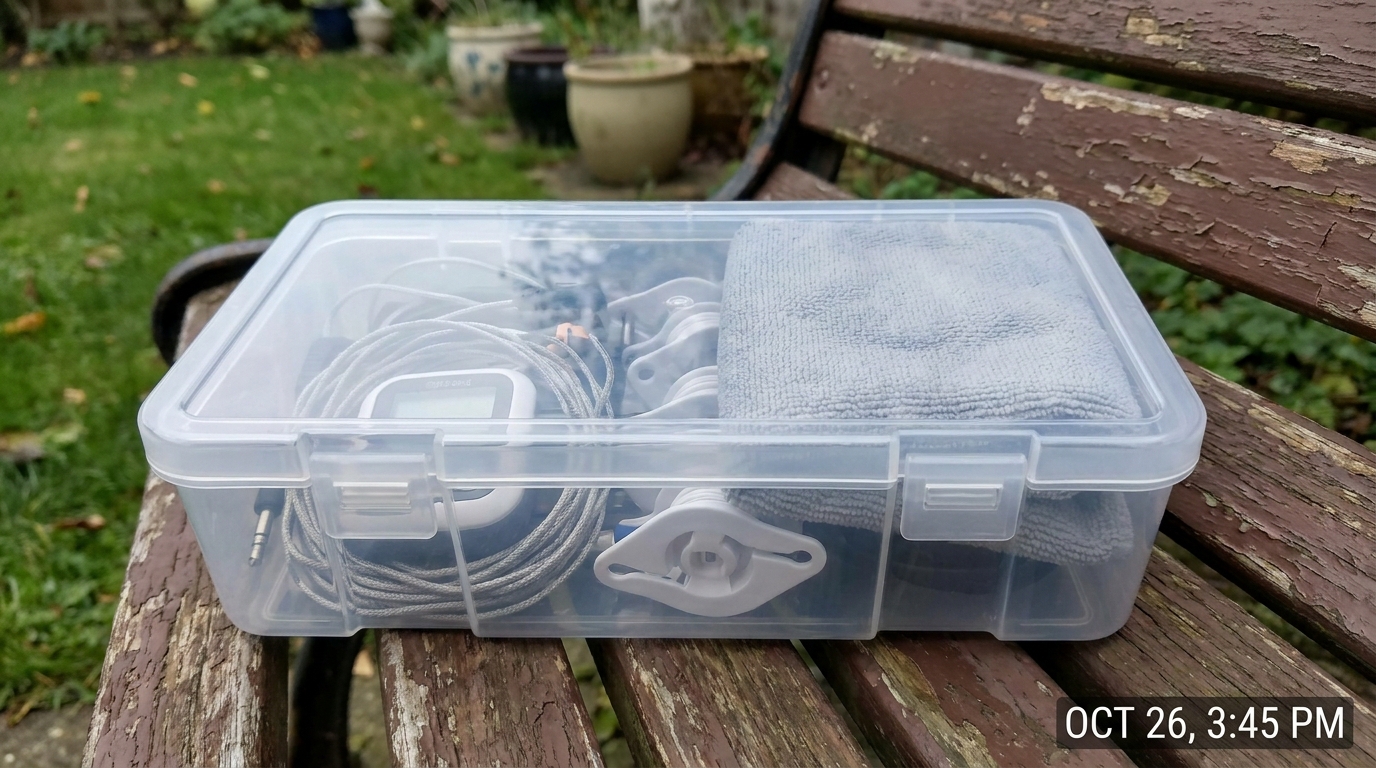
Building a durable, protective home for your probes does not require a custom case or expensive accessories. A standard clear plastic utility organizer box—the type used for sorting screws or fishing lures—is the perfect foundation. Look for a box with adjustable dividers so you can customize the compartment sizes to fit your digital transmitter, receiver unit, grate clips, and individual probes.
For wrapping the cables, purchase a few soft silicone cable wraps or small hook-and-loop straps. Never use wire twist-ties, which have sharp metal cores that can damage the braided steel shielding, and never wind the cables tightly around the transmitter body. The silicone wraps allow you to secure each cable in a loose, gentle circle without creating sharp bends.
Finally, drop a small silica gel packet into the box to manage humidity. These tiny packets absorb any residual moisture left on the cables after cleaning, preventing corrosion from forming on the metal headphone-style jacks. This simple addition ensures clean electrical contact and accurate temp readings every time you plug in.
Cleaning and Winding Rules
Proper cleaning is just as important as neat storage. During a long cook at 225°F (107°C) to 250°F (121°C), probes collect grease, ash, and sticky smoke condensate. Never submerge the entire cable in a sink of dishwater or throw it in the dishwasher. Wash the metal probe tip with a warm, soapy sponge, and wipe the braided steel cable down with a damp microfiber cloth, drying it off immediately with a clean towel.
When winding the cables, always follow the natural curl of the wire. Loop each cable into a loose circle about three inches (7.5 cm) in diameter, avoiding any tight bends. Never pull the wire tight or wrap it around your hand, as this strains the connections where the cable joins the probe tip and the input plug.
Maintaining your gear is an essential habit for a clean backyard setup. Just like keeping your smoker grates clear of old grease, taking care of your electronics ensures your cooks go smoothly. For broader maintenance tips, check out how to deep clean your grill.
Storing for the Long Term
Where you store your probe box is just as important as how you clean it. Never leave your digital probe kit sitting inside your smoker cabinet, outdoor kitchen, or backyard shed during the off-season. High humidity, winter cold, and summer heat will quickly degrade the batteries in your transmitter units and cause condensation to form behind the digital display screens.
Big B’s Take: Keep your organizer box inside the house in a climate-controlled closet or utility room shelf. This protects the sensitive electronics from moisture swings. When it is time to light the pit, you can grab the box by the latch knowing everything inside is dry, calibrated, and ready to go.
Keep the fire steady and the drinks cold. I’ll see you at the pit. - Big B