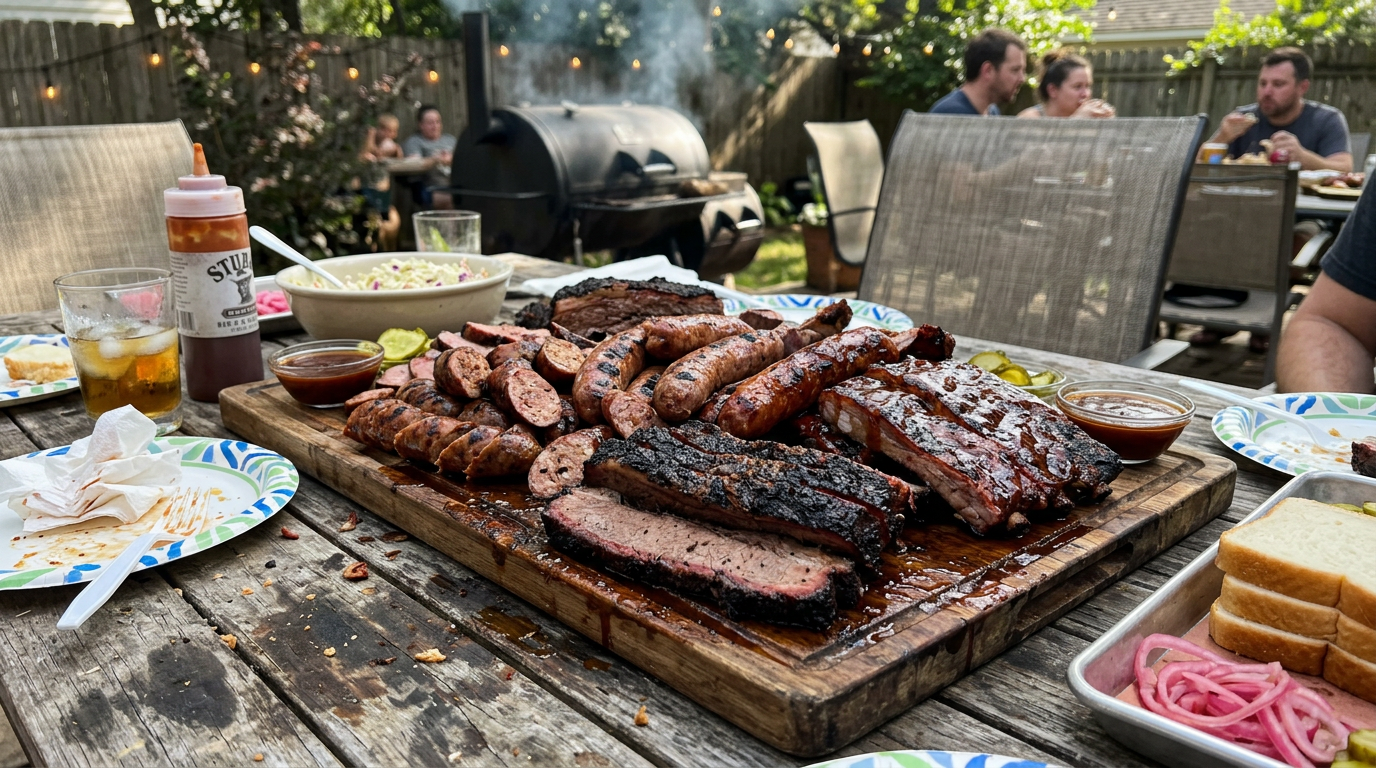
BBQ Meat Math: How Much is Enough?
🔥 Big B’s Quick Hits (TL;DR)
- The Cooked Goal: Aim for 0.5 lb (225g) of cooked meat per adult.
- The Shrink Factor: Brisket loses 50% of its weight; Pork Butt loses about 40%.
- Rib Logic: Budget 1/2 rack per person if other meats are served, or 1 full rack if ribs are the main event.
- The Shortcut: Use my interactive Meat Math Estimator to get instant answers for any crowd.
The Pitmaster’s Anxiety
There is no greater fear for a BBQ host than running out of meat before the last guest has been served. Conversely, nobody wants to spend $200 on a brisket only to realize they have ten pounds of leftovers they can’t finish.
Getting your meat math right is how you keep a party stress-free. It’s about understanding the physics of the pit. Specifically, how much of that expensive raw meat is actually going to make it to the plate.
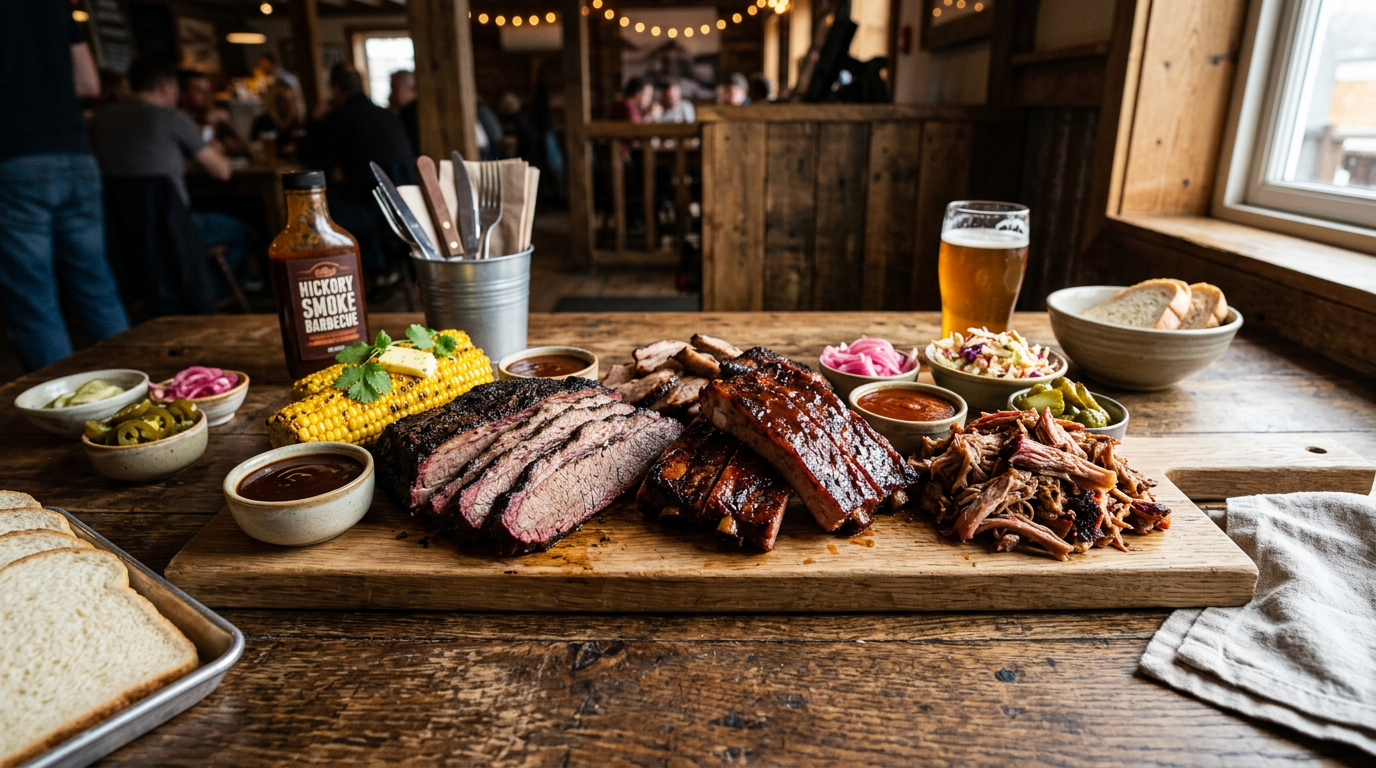 A successful feast starts with accurate math. Don’t let your guests leave hungry.
Use the Tool
If you’re in a hurry and just need the numbers, I’ve built a custom tool that does all the work for you. Just plug in your guest count and select your meat:
The Golden Rule of BBQ Math
For a standard party where BBQ is the main event, you should aim for 1/2 pound (8 oz) of cooked meat per person.
If you are serving big eaters or it’s a long event where people will graze, bump that up to 3/4 pound. If you have a lot of heavy sides like mac and cheese, potato salad, or beans, you can drop it to 1/3 pound.
The Variable: The Shrink
This is where beginners get tripped up. A 15-pound raw brisket does not produce 15 pounds of food. Between trimming fat and the loss of moisture during the long smoke, you will lose a significant amount of weight.
- Brisket: Loses roughly 50% of its weight. A 15lb raw packer yields about 7.5lb of cooked meat.
- Pork Butt: Loses roughly 40-50% of its weight.
- Ribs: Calculate by the rack. 1/2 rack per person is the standard for a mixed menu.
- Chicken: Calculate by the piece. 2-3 pieces per person. Think a drumstick and a thigh.
The “Big B” Calculation Formula
If you want to do it by hand, here is my personal formula for calculating how much raw meat to buy:
- Count your guests. (e.g., 20 people)
- Multiply by 0.5 lbs. (20 x 0.5 = 10 lbs of cooked meat needed).
- Account for shrink (x2 for Brisket/Pork). (10 lbs cooked x 2 = 20 lbs of raw meat to buy).
Tips for the Host
- Variety Matters: If you are serving two meats (e.g., Brisket and Pulled Pork), you don’t need 1/2 pound of each. You need 1/2 pound total. I usually split the ratio 60/40 in favor of the more popular meat (usually the brisket).
- Kids Count as Half: For every two children under 12, count them as one adult.
- Plan for Leftovers: BBQ is often better the next day. If you want leftovers, simply add 2-3 extra pounds to your final “raw” purchase.
With a little bit of math up front, you can spend less time worrying about the quantity and more time focusing on the quality of your smoke.
Keep the fire steady and the drinks cold.
— Big B