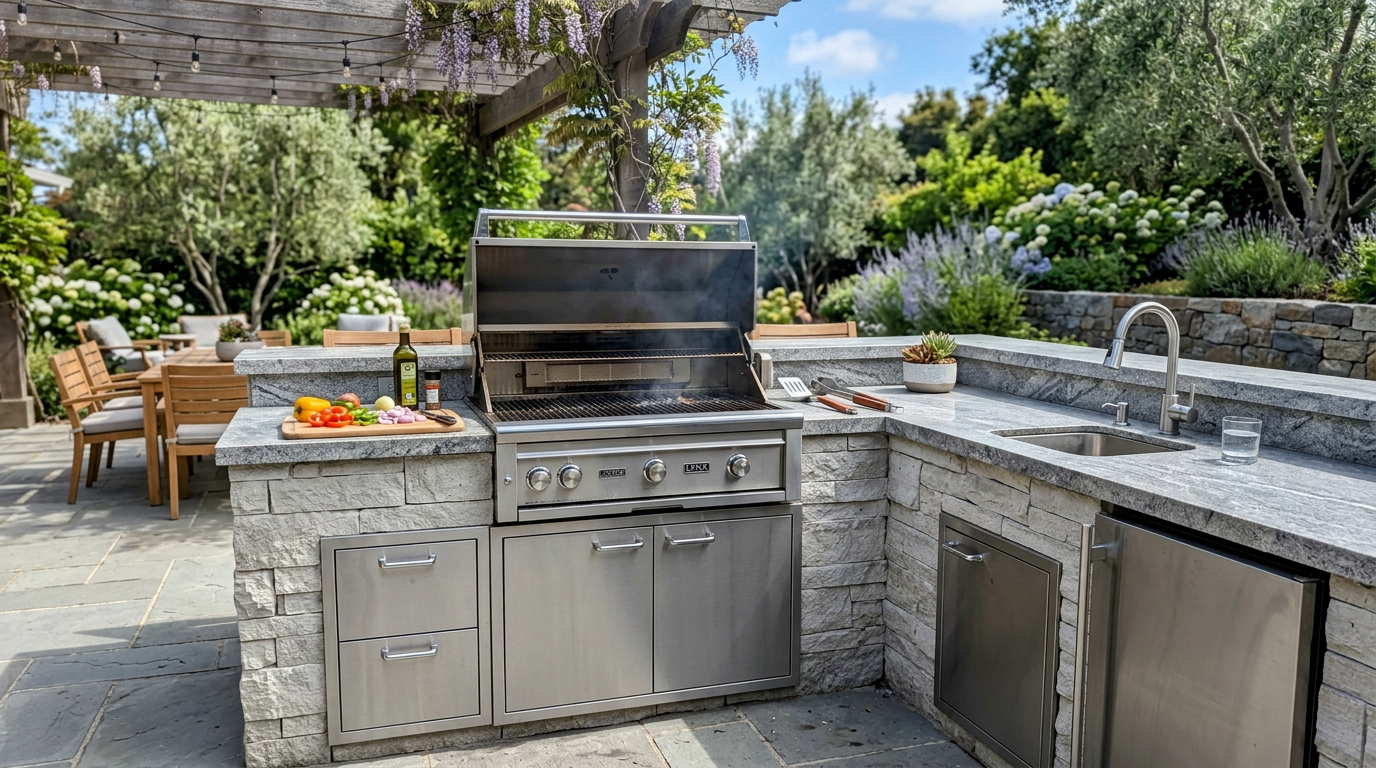
The Anatomy of a Perfect Outdoor Kitchen
Introduction
Building an outdoor kitchen is a dream for many pitmasters, but it can quickly become a mess if you don’t plan for the realities of outdoor cooking. A beautiful kitchen is worthless if it’s frustrating to use. To get it right the first time, you need to think beyond the grill and focus on workflow.
1. The Functional Work Triangle
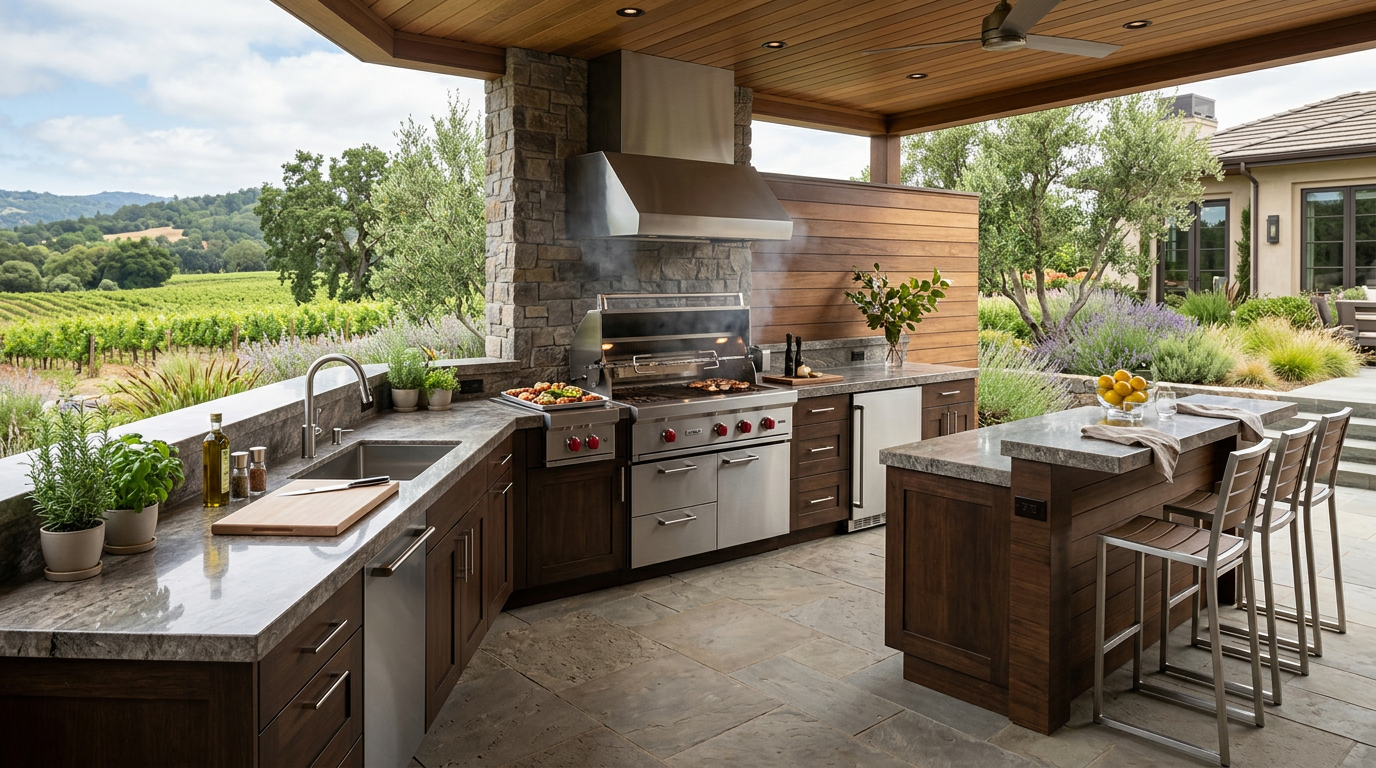
Just like an indoor kitchen, your outdoor space should follow the “Work Triangle” principle. This is the path between your three most-used areas:
- The Hot Zone: Your grill, smoker, or pizza oven.
- The Cold Zone: Your refrigerator or ice chest.
- The Wet Zone: Your sink and prep area.
For maximum efficiency, these three areas should be close enough to easily move between, but far enough apart that you aren’t cramped. Aim for a total distance of 12 to 25 feet between the three points.
2. Counter Space: The Hidden Necessity
The biggest mistake homeowners make is choosing a massive grill and leaving no room for prep. You need “landing zones”—flat surfaces immediately next to your grill where you can place raw platters, finished meat, and tools.
- Minimum Requirement: At least 24 inches of clear counter space on one side of the grill and 12-18 inches on the other.
3. Material Selection: Form vs. Function
Everything in an outdoor kitchen must withstand UV rays, extreme temperature shifts, and moisture.
- Countertops: Granite is the gold standard for outdoor use as it is durable and heat-resistant. Concrete is popular but requires frequent sealing to prevent staining. Avoid quartz, as the resins used in its manufacture can yellow and crack in direct sunlight.
- Cabinetry: Marine-grade stainless steel or high-density polyethylene (HDPE) are the only materials that will truly last. Wood, even pressure-treated, will eventually rot or warp in most climates.
4. Utilities and Safety
Don’t forget the “invisible” parts of your kitchen:
- Gas: If possible, run a dedicated natural gas line. Dealing with propane tanks in the middle of a 12-hour smoke is a hassle you don’t want.
- Electric: You’ll need GFCI outlets for rotisseries, lights, and small appliances.
- Ventilation: If your kitchen is under a roof or a pergola, a high-cfm vent hood is mandatory to prevent smoke and grease from staining your ceiling and choking your guests.
By focusing on these essentials, you’ll create a space that actually works for you. It shouldn’t just look good. It needs to make every BBQ a real pleasure.