Seasoning Your Steel: Care for Cast Iron and Carbon Steel
The Magic of Polymerized Oil
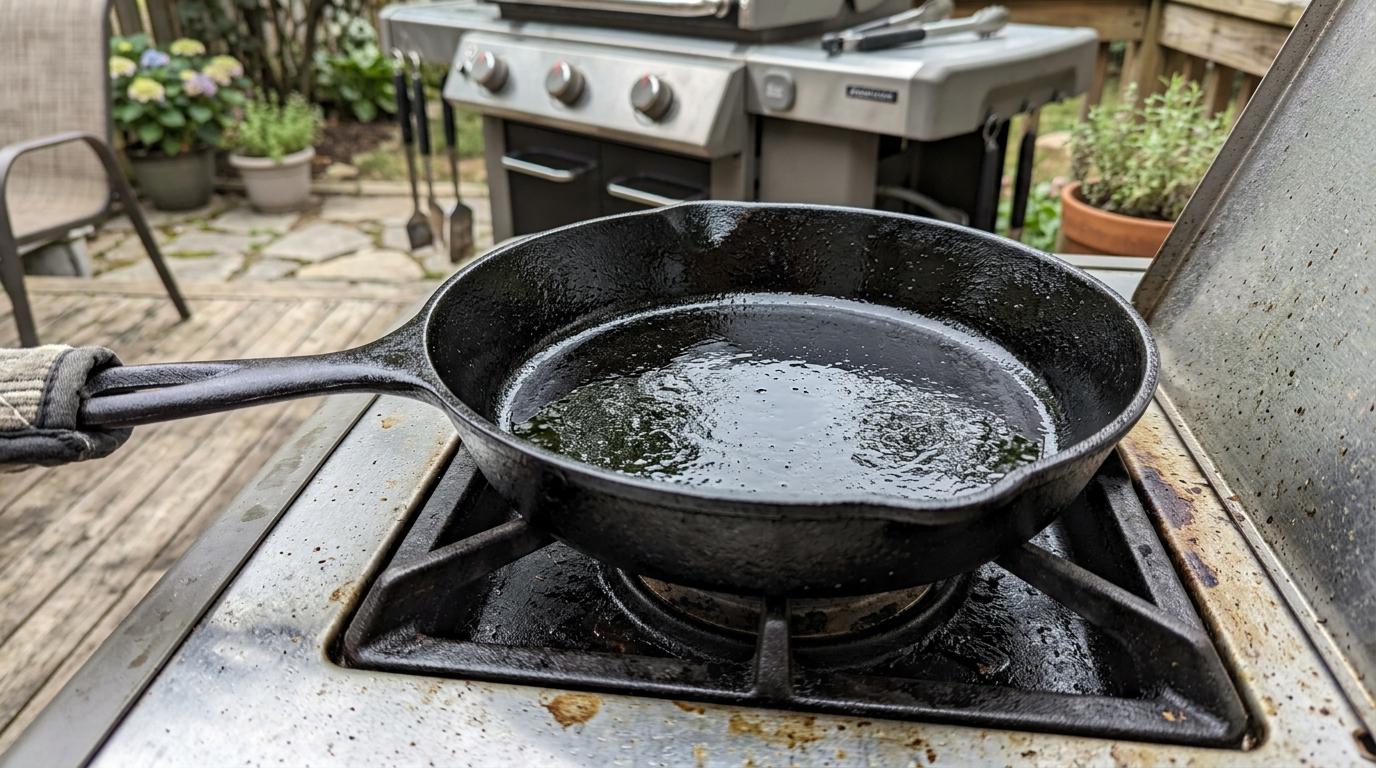
A well-seasoned cast iron skillet or carbon steel griddle is the best BBQ companion you can have. Whether you’re searing steaks or frying bacon on the side burner, a seasoned pan is actually a scientific marvel. It’s a layer of oil that has been heated until it polymerizes. That means it turns into a hard, plastic-like, non-stick coating.
The Initial Seasoning
If you have a new or rusty pan, follow these steps to build the foundation:
- Strip it: If there’s rust, scrub it off with steel wool and mild soap. This is the only time you should use heavy abrasion.
- Oil it: Apply a very thin layer of high-smoke-point oil like Grapeseed, Flaxseed, or Canola. Use a paper towel to wipe it off until the pan looks dry. You only want a microscopic layer.
- Bake it: Place the pan upside down in a 450°F oven for one hour.
- Repeat: For a truly non-stick surface, repeat this process 3-5 times.
Daily Care: Debunking the Soap Myth
The biggest myth in the kitchen is that you can’t use soap on cast iron.
- Modern Soap is Fine: Gentle dish soap will not remove a properly polymerized seasoning. It will remove the loose, un-polymerized grease that can go rancid.
- The Real Enemy is Moisture: Never, ever let your steel air dry. After washing, place it on a warm burner for 2 minutes to evaporate all moisture, then apply a tiny drop of oil and wipe it across the surface before storing.
Why it Matters for BBQ
Cast iron and carbon steel have incredible “heat sink” properties. When you’re finishing a Reverse Sear Ribeye, a cast iron skillet provides a much more even and intense sear than a standard stainless steel pan or a thin grill grate.
Treat your steel with respect, and it will literally outlive you.