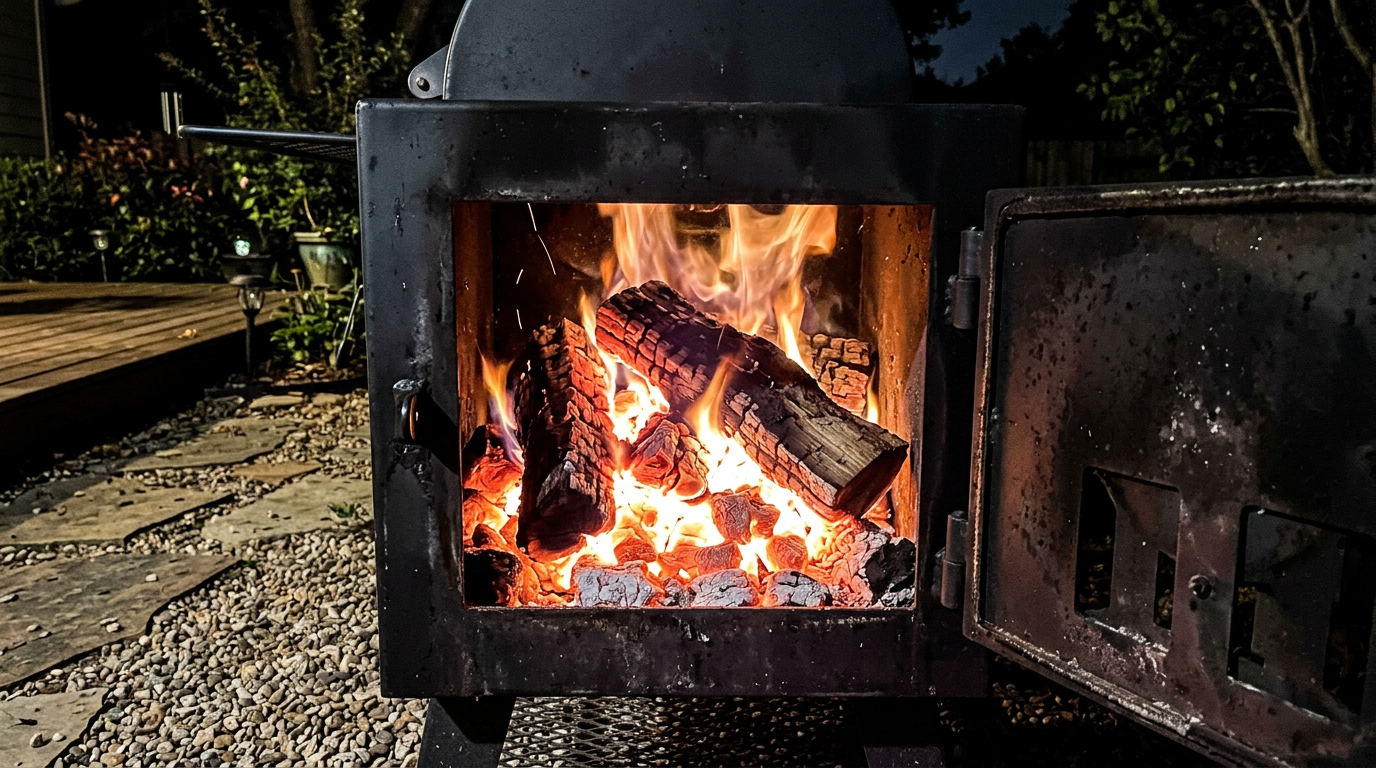
Mastering the Heat of Mesquite: The South Texas Stick Burner's Guide
🔥 Big B’s Quick Hits (TL;DR)
- The Power: Mesquite has the highest BTU output of any common BBQ wood. It burns fast and extremely hot.
- The Clean Fire: Never cook over green or unlit mesquite. You have to wait for it to burn down to glowing white coals to avoid bitter creosote.
- The Blend: For beginners, I recommend a 70/30 blend of Oak and Mesquite. It’s like training wheels for that intense smoke profile.
- The Airflow: Keep your dampers wide open. Mesquite needs tons of oxygen to stay clean and avoid that nasty Dirty Smoke.
The Melting Pot of Mesquite
If you’ve spent any time around a Stick Burner in the Brush Country of South Texas, you know the smell before you even see the smoke. It’s sharp, earthy, and unmistakably powerful. It’s the smell of Mesquite.
When you’re looking at BBQ woods, Mesquite is often treated like a stick of dynamite. Use it right, and you get a bold, legendary flavor that can stand up to the richest beef brisket. Use it wrong, and you’ll end up with meat that tastes like an ashtray and a fire that’s hot enough to melt your grates.
I’ve spent half my life trying to tame this wood. I’ve had fires get so hot they blistered the paint on my firebox, and I’ve produced enough Dirty Smoke to choke a vaquero. But through all that “tuition” paid in ruined meat, I’ve learned that Mesquite isn’t something to be feared. It’s something to be understood. Let’s talk about how to manage the most powerful wood in the Backyard.
The Stick of Dynamite: Understanding Mesquite’s Power
To master mesquite, you first have to understand what makes it tick. In technical terms, honey mesquite (the kind we use most in South Texas) has an incredibly high lignin content. Lignin is the ‘glue’ that holds wood fibers together, and when it burns, it releases a massive amount of energy. While a standard log of Oak is like a slow-burning marathon runner, a log of mesquite is like a world-class sprinter. It wants to go fast, and it wants to go hot.
This density means that mesquite puts out significantly more BTUs (British Thermal Units) per pound than almost any other BBQ wood. If you try to build a massive fire with large mesquite logs, your pit temperature will skyrocket past 300°F (149°C) before you can even get your brisket on the grate. It’s a wood that demands your constant attention because its burn cycle is so short and intense.
But it’s not just about the heat; it’s about the chemical makeup of that smoke. Because it burns so hot, mesquite produces a very distinct, earthy, and almost ‘savory’ smoke profile. However, if that fire isn’t getting enough oxygen, those same dense fibers will smolder and produce Creosote—a thick, black, bitter substance that will ruin your meat faster than you can say ‘San Antonio.’ This is why we never treat mesquite like hickory; you can’t just throw a log on and walk away for an hour.
Seasoning the Soul: How to Cure and Store Mesquite
Using ‘green’ (fresh-cut) mesquite is the single biggest mistake I see in the South Texas BBQ scene. Because mesquite is so dense, it holds onto moisture like a desert camel. If you try to burn wood that hasn’t been properly seasoned, your fire will spend all its energy boiling that water out of the wood instead of producing clean heat. This results in Dirty Smoke—that billowy, white, acrid cloud that leaves a bitter film on your meat.
You’re looking for a moisture content of about 15% to 20%. In the South Texas heat, this usually takes at least 6 to 9 months of air-drying. You can tell a log is ready by the ‘clink’ test—strike two logs together, and they should sound like a baseball bat hitting a ball, not a dull thud. Properly seasoned mesquite will also have deep cracks (checking) at the ends and the bark will be starting to flake off.
Storage is just as important as curing. While we don’t get much rain down here, when we do, mesquite will soak it up and ‘re-green’ itself. I keep my wood stack on a raised pallet to allow for Airflow underneath and covered with a simple tin roof. You want the wind to hit it, but the water to miss it. If your wood gets soaked in a thunderstorm, don’t use it for at least a week. A wet mesquite log in a hot firebox is a factory for steam and bitterness, and no amount of Mop Sauce can save a brisket from that.
The Burn Down Method: Taming the Pungency
If you want the secret to that legendary South Texas flavor without the bitter aftertaste, you need to learn the Burn Down Method. In many old-school pits, you’ll see a separate fire cage or a smaller pit sitting next to the main smoker. This isn’t for show; it’s where the magic happens. We never add raw, flaming mesquite logs directly to the main firebox if we can help it.
Instead, we start a secondary fire and let the mesquite logs burn completely through until they collapse into glowing, white-hot coals. By burning the wood down first, you’ve already ‘cooked’ out the most volatile gases and harsh resins. What’s left is a concentrated source of pure, radiant heat and a much milder, refined smoke. It’s like the difference between a raw onion and one that’s been caramelized—the sharp bite is gone, but the soul remains.
Once you have a bed of coals in your burn-down cage, you use a shovel to transfer them into your main Offset Smoker firebox. This allows you to maintain a rock-steady temperature—say, 250°F (121°C) to 275°F (135°C)—with almost zero risk of a temperature spike or a creosote flare-up. It’s more work, sure, but it’s the only way to get that ‘Blue Smoke’ consistency that separates the amateurs from the pitmasters.
Small Fire, Big Flavor: The Firebox Strategy
When you’re working with a high-BTU wood like mesquite, your natural instinct might be to use large logs so you don’t have to keep opening the firebox. That’s a trap. A large mesquite log is like a massive boulder in a stream—it blocks the flow and creates turbulence. In BBQ terms, a giant log takes too long to reach its combustion temperature, which means it spends the first 20 minutes smoldering and producing acrid smoke.
The ‘Big B’ way is to use small, uniform splits—no thicker than your wrist. Think of your firebox like a high-performance engine. You don’t dump a gallon of fuel in all at once; you want small, frequent injections of energy. By adding a small split every 20 to 30 minutes, you ensure that the wood ignites almost instantly. This keeps your fire ‘active’ and your smoke transparent.
This ‘feeding the beast’ strategy is what allows us to maintain those perfect Blue Smoke conditions. If you see your pit temp dipping below 225°F (107°C), don’t wait for it to hit 200°F before adding wood. Add a small split the moment the needle starts to move. Managing a mesquite fire is a dance, not a chore. It requires you to be present, but the result is a clean, seared flavor that you just can’t get any other way.
Managing the Hot Spot: Technical Airflow for Mesquite
If your fire is the engine, then your Airflow is the throttle. With mesquite, most beginners make the mistake of closing their dampers to try and ‘choke’ the heat when the pit gets too hot. This is a one-way ticket to a bitter dinner. Closing the intake on a mesquite fire starves it of oxygen, causing the wood to smolder and release raw resins.
The technical secret to taming mesquite is to keep your dampers wide open. You want as much oxygen moving through that firebox as possible. If the pit is running too hot—say it’s pushing 300°F (149°C) and you want it at 250°F (121°C)—you don’t fix it with the dampers. You fix it by using a smaller fire.
By keeping the airflow high and the fire small, you ensure that every molecule of wood is being burned completely. This is what creates that ‘shimmer’ above the chimney instead of thick smoke. It’s better to have a tiny, screaming-hot fire with high airflow than a large, choked fire. Your goal is constant convection, where the heat is moving quickly over the meat, building that perfect Bark without drying out the interior.
The Shovel Method: Managing Live Coals
For the advanced stick burner, the most important tool isn’t the thermometer—it’s the shovel. In South Texas, we use a small metal ash shovel to manage the ‘bed of hell’ inside the firebox. As your mesquite splits burn down, they create a layer of glowing embers that act like a giant thermal battery.
The Shovel Method involves moving those active coals around to manage your radiant heat. I like to push the newest, hottest coals toward the intake to pre-heat the incoming air, while keeping the older, steady embers directly under the newest wood split to ensure an instant ignition. This constant shuffling ensures that your fire never has a ‘dead spot’ and your heat output remains consistent for the entire 12-hour cook.
This coal bed is the secret to getting through The Stall. When the meat starts to sweat and the temperature plateaus, you need a steady, high-energy heat source to push through. By building a massive bed of mesquite coals using the shovel method, you create a reservoir of infrared energy that doesn’t fluctuate every time you open the firebox door. It’s the best way to maintain control over a wood that naturally wants to be wild.
The Flavor Profile: Earthy, Bold, and Unforgiving
Mesquite smoke is not subtle. While apple wood provides a gentle kiss and hickory offers a savory hug, mesquite is a heavyweight punch. It has an earthy, almost spicy profile that is the direct result of the harsh desert environment where it grows. It’s a flavor that has to be respected—if you overdo it, your meat will taste less like BBQ and more like a campfire gone wrong.
Because the flavor is so intense, you have to be strategic about your proteins. Beef is the perfect partner for mesquite. The heavy fat content and rich iron profile of a brisket or a beef rib can stand up to the bold smoke without getting lost. It’s also the king of woods for Game Meats like venison or wild boar, where the earthy smoke complements the natural ‘funk’ of the meat.
On the other hand, I generally tell folks to avoid using 100% mesquite for poultry or fish. Chicken skin is like a sponge for smoke particles; a 4-hour smoke over pure mesquite will often turn it bitter and dark. If you must use mesquite for lighter meats, I recommend a 70/30 blend with a milder fruitwood like apple or cherry to take the edge off. Remember: the goal is to enhance the meat, not to bury it.
Avoiding the Bitter Bite: How to Spot Creosote Early
Your smoke is the breath of your pit. If your pit is ‘breathing’ heavy, white, or gray clouds, you’re in trouble. That’s Dirty Smoke, and it’s filled with unburned particulates and Creosote. This is especially dangerous with mesquite because of its high resin content. If you see thick smoke for more than a few minutes after adding a split, your fire is struggling to reach combustion temperature.
The golden rule is to always aim for Blue Smoke. It should be almost transparent—a shimmering heat wave with just a hint of a blue tint. If you can’t see the meat through the smoke, you’re not cooking; you’re just staining the meat.
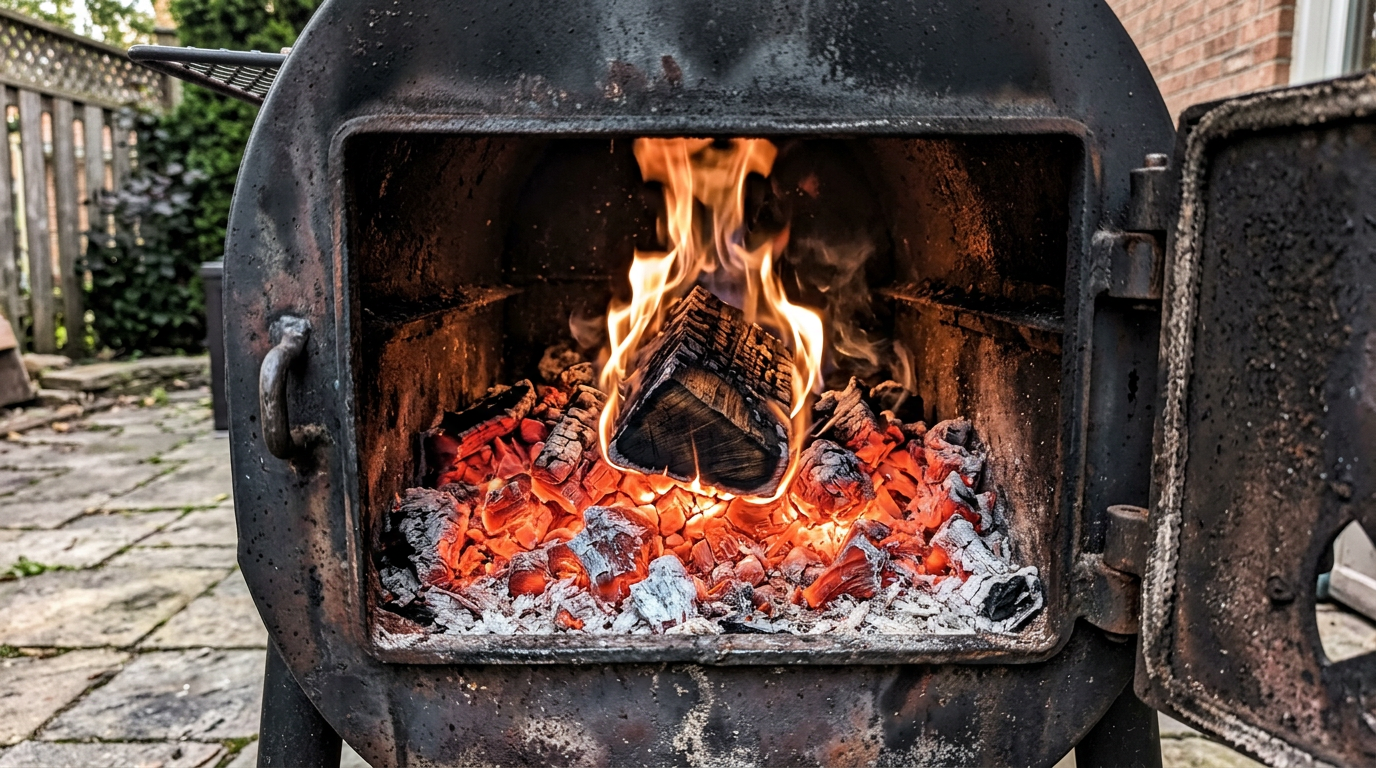
I use the ‘smell test’ constantly. Lean in and take a whiff of the exhaust coming out of the chimney. It should smell sweet, savory, and appetizing. If it stings your eyes or smells like a chemical fire, your fire is too cold or your wood is too wet.
Big B’s Early Warning System: If you notice your Bark is looking greasy or wet instead of dry and structured, that’s an early sign of creosote buildup. Increase your Airflow immediately. Open the firebox door for a minute to give the fire a massive hit of oxygen and get those temperatures up. It’s better to have a 10-minute temperature spike than a 12-hour bitter brisket.
Safety in the Spark: Handling the Mesquite ‘Pop’
Before we wrap up, we need to talk about safety. Mesquite is what I call a ‘firecracker wood.’ Because of its density and occasional hidden sap pockets, it is notorious for popping and throwing sparks out of the firebox. I’ve seen a single mesquite pop throw a glowing ember ten feet across a deck.
When you’re feeding a mesquite fire, always wear your heavy-duty heat gloves. Don’t lean your face directly over the firebox when you add a new split—that’s usually when the biggest pops happen. I also recommend keeping a clear ‘no-burn’ zone around your smoker. If you’re cooking on a wooden deck, a fire-resistant grill mat is a mandatory piece of gear.
Mastering mesquite takes time, grit, and a few singed arm hairs. But once you pull that first perfectly barked brisket off a clean mesquite fire, you’ll understand why we do it. It’s the flavor of the frontier, and it’s the real badge of honor for any South Texas pitmaster.
Keep the fire steady and the drinks cold. I’ll see you at the pit.
— Big B
Keep the Fire Burning
Tacos al Carbón: The Authentic South Texas Fajita Guide
Forget the sizzle platters. This is the real deal. Mesquite-seared skirt steak, acid-bright marinades, and the secret to the perfect against-the-grain slice.
Read GuideThe Big B's Guide to South Texas BBQ: Smoke, Spice, and Vaquero Soul
Dive deep into the heart of South Texas BBQ. From the subterranean pits of barbacoa to the mesquite-fired grills of the vaqueros, this is the complete guide to the state's most culturally rich smoke tradition.
Read GuideThe Post Oak Bible: Master the Backbone of Central Texas BBQ
Why Post Oak is the ultimate 'Goldilocks' wood for brisket, how to source it, and the secrets to getting that perfect clean blue smoke.
Read Guide