The Kansas City BBQ Blueprint: Techniques, Tastes, and the Modern Pit
🔥 Big B’s Quick Hits (TL;DR)
- The Mix: The standard KC wood baseline is a 50/50 blend of Hickory and Oak.
- The Bark: KC rubs rely on a complex matrix of Brown Sugar and Paprika to build a mahogany-colored, caramelized crust.
- The Sauce: A high-viscosity emulsion of Tomato and Molasses. It must be applied at the end of the cook to avoid burning the sugars.
- The Point: Burnt ends are made by separating the fatty Point of the brisket, cubing it, and returning it to the smoker for a secondary caramelization.
- The Vanguard: Modern KC is defined by Craft BBQ (prime meats and offset smokers) and Thai-Fusion (Buck Tui).
The Kansas City BBQ Blueprint
In my first guide, we talked about the History of Kansas City BBQ. We saw how a single pushcart in an alleyway built a culinary empire. But knowing the history is one thing. Mastering the pit is another.
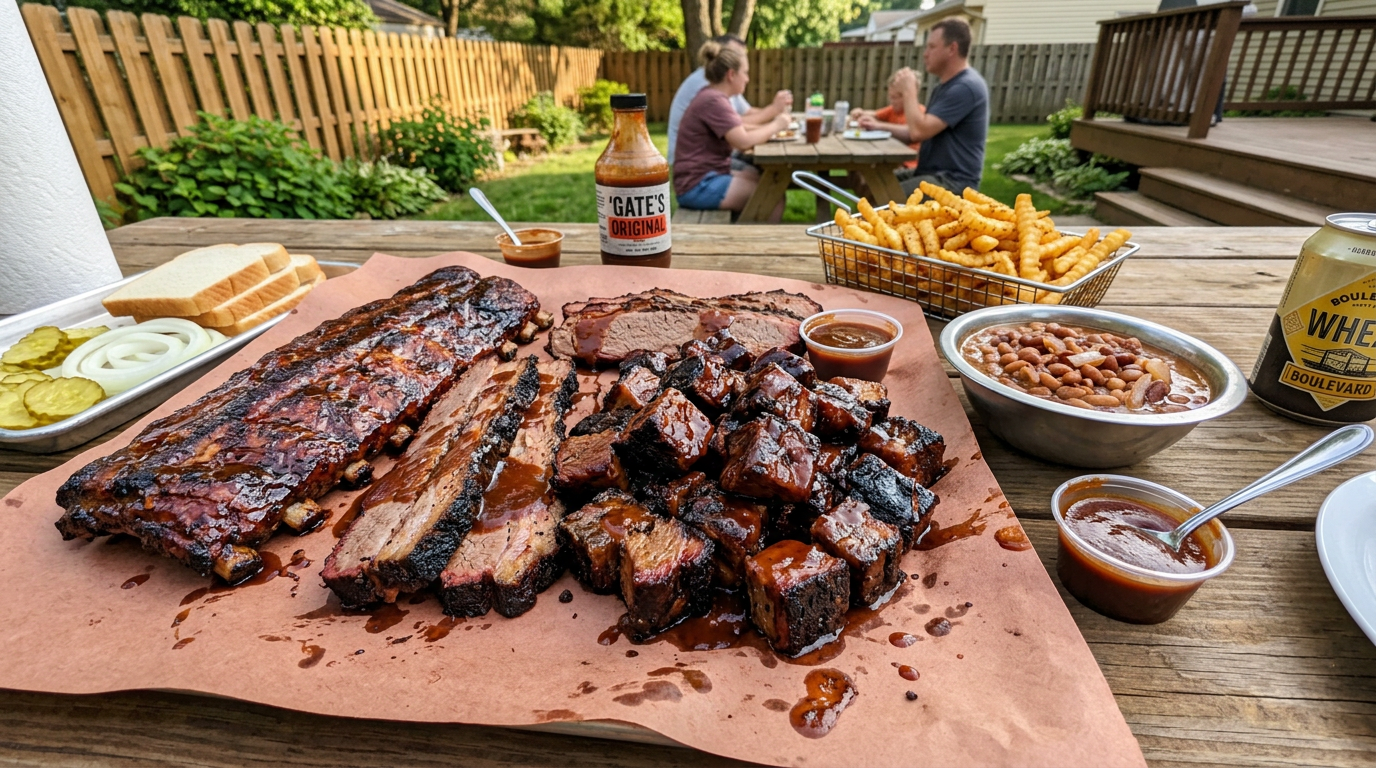
Kansas City BBQ is often called the ‘Melting Pot’ of American smoke. From a technical side, it’s a system of specific flavors. It’s a style that wants a deep mahogany Bark. It balances the punch of hickory with the sweet lacquer of a molasses sauce. Whether you’re smoking a brisket or a rack of spare ribs, there is a way to do it the KC way. I’m going to show you the science and the secrets that make this style work.
The Meat-Agnostic Philosophy: Versatility in the Pit
The most important trait of a Kansas City pitmaster is versatility. In other regions, you can hide behind one specialty. If you’re in Central Texas, you better be good at Brisket. If you’re in Eastern North Carolina, you focus on the whole hog. But in Kansas City, we smoke everything. This comes from the history of the Stockyards.
KC was a livestock hub for over a century. Local cooks had access to every animal. This forced them to learn how different meats behave on the fire. You have to understand the fatty point of a brisket and the lean meat of a whole turkey. You can’t manage the fire for a 12-hour brisket the same way you manage a 4-hour bird. In KC, they’re often on the same pit at once.
This makes the KC style a toolbox. You have to master temperature zones inside your Stick Burner. You have to know which meats need a Mop Sauce to stay moist and which ones can take the direct heat. A classic ‘Mixed Plate’ in KC is a test of how well you can manage different types of fat and heat.
Thermal Management: The 50/50 Hickory & Oak Baseline
Every BBQ style has its fuel. In Kansas City, we use the hardwoods from the Midwestern river valleys. The technical baseline for KC BBQ is a 50/50 blend of Hickory and Oak.
Think of it this way. Hickory is the punch. It has a lot of lignin and produces a robust, savory smoke. It’s what gives BBQ that bacon-like smell. But hickory can be aggressive. If your fire isn’t perfect, it turns bitter and makes Creosote.
Oak is the steady hand. It burns clean and predictably. It gives you the energy to keep your pit at 250°F (121°C) to 275°F (135°C) for 12 hours. When you blend them, you get the deep smoke flavor of hickory with the reliable heat of oak. This lets you get a deep Smoke Ring without making the meat taste like a chemical fire.
The Mahogany Bark: Science of the KC Rub
In the Backyard, we respect the salt and pepper of Central Texas. But in Kansas City, the dry rub is more complex. We want a Bark that is thick, mahogany-colored, and sweet.
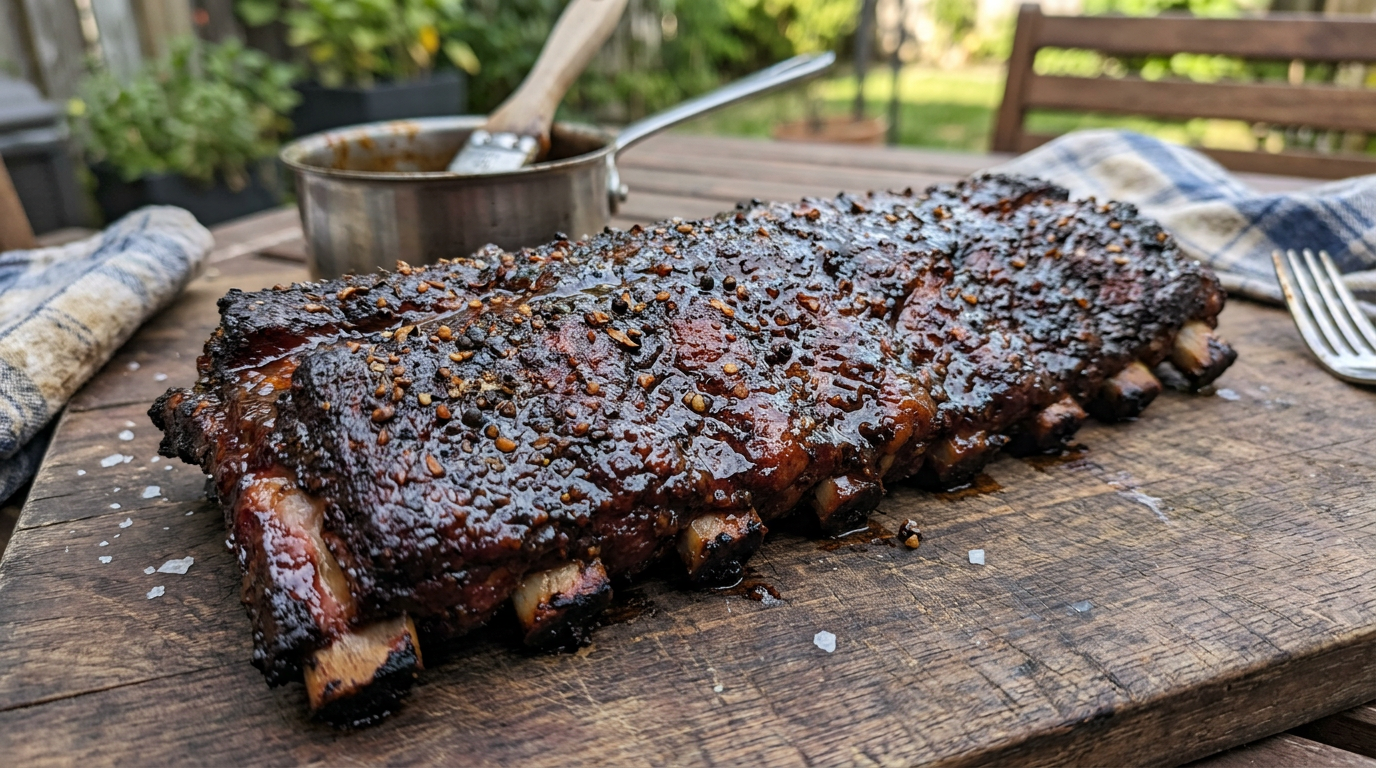
The main ingredient in a KC rub is dark brown sugar. This does two things. It adds sweetness to the savory smoke. It also helps the Maillard Reaction. When the sugar melts, it caramelizes. It acts like glue. It traps smoke and spices on the surface of the meat. This builds a dense crust that keeps the meat from drying out.
The second part of the rub is Paprika. It adds a little earthiness, but it’s mostly for the look. Paprika gives KC BBQ that deep-red finish. We mix this sugar and paprika with coarse salt, 16-mesh black pepper, and chili powder. This mix creates a rough surface on the meat. It gives the smoke more area to grab onto. You end up with a bark that is crunchy and full of flavor.
The Architecture of the Sauce: Viscous Emulsions
In KC, the sauce is the uniform. While early KC sauces were thin and peppery, the modern standard is thick. A real KC sauce is designed to stay exactly where you put it.
The secret is Dark Molasses. Molasses is more than a sweetener. It’s a binder. It creates a thick liquid that holds spices and tomatoes together. When you put this sauce on hot meat, the sugars dehydrate. They link up and create a lacquer. It becomes a second skin. This locks in the juices and gives you a burst of flavor.
This thick profile is why the world knows KC sauce. While other regions use mustard or thin vinegar, the KC version is built for the heat. It’s painted onto ribs at the end of the cook. It turns from a liquid into a sticky glaze that shines on the plate.
Mastering the Lacquer: The Glazing Technique
Don’t apply a sugar-heavy KC sauce too early. Molasses and brown sugar burn at low temperatures. If you sauce your ribs at the start of a cook, you’ll get a black, bitter crust.
The secret is timing. Apply your sauce in the final 30 to 45 minutes. This is the ‘setting’ phase. Your meat should already be at its target temperature—like 195°F (91°C) for ribs. You’re just using the heat of the pit to dry the sauce.
Use a silicone brush to put on a thin, even coat. Then close the lid. Keep the pit at 225°F (107°C). You want the sauce to go from wet to tacky. It should be a slightly see-through glaze that doesn’t rub off. For a deeper look, add a second thin coat 15 minutes after the first. This is how you get a competition-style finish.
The Double Smoke: Engineering the Perfect Burnt End
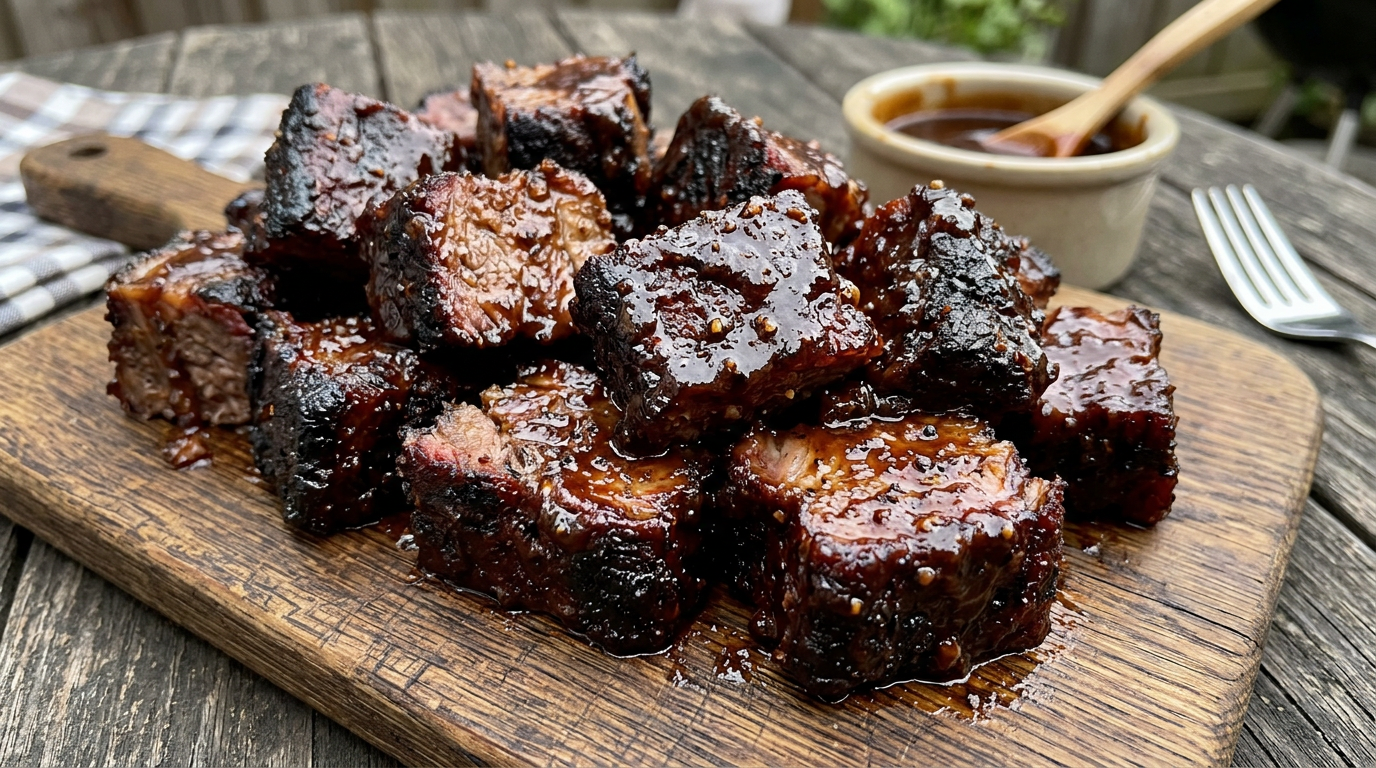
The best bite in Kansas City is the Burnt End. These aren’t leftovers. They are a double-smoked delicacy. You have to understand the anatomy of the brisket to get them right.
A brisket has two muscles: the flat and the fatty ‘point.’ The point is where you get burnt ends. It has a lot of fat and connective tissue called Collagen. The flat is ready to eat at 203°F (95°C), but the point needs more time to break down.
The KC method is to cut the point away from the flat when the main cook is done. You cut the point into 1-inch cubes. Toss those cubes in rub and thick sauce. Then put them back in the smoker in a pan. This is the second smoke. The collagen turns into Gelatin. The sauce caramelizes into a shell. The result is a piece of meat that melts in your mouth like candy.
Hickory Pit Beans: Cooking Inside the Smoke
In KC, sides are not an afterthought. They are part of the pit. The best example is the Hickory Pit Bean. These aren’t the thin beans from a can. They are thick and savory.
The secret is they are cooked inside the smoker. You put a cast iron pot of beans on the rack below your meat. They catch the fat and drippings from the brisket or ribs. That ‘liquid gold’ adds a depth you can’t get from a bottle.
The beans also absorb the smoke. They act like a sponge for the Hickory and Oak. We add brisket trimmings, rub, and a splash of KC sauce to the pot. This makes a side dish that is rich and smoky. In KC, the smoke touches everything.
The Cheesy Corn Legacy
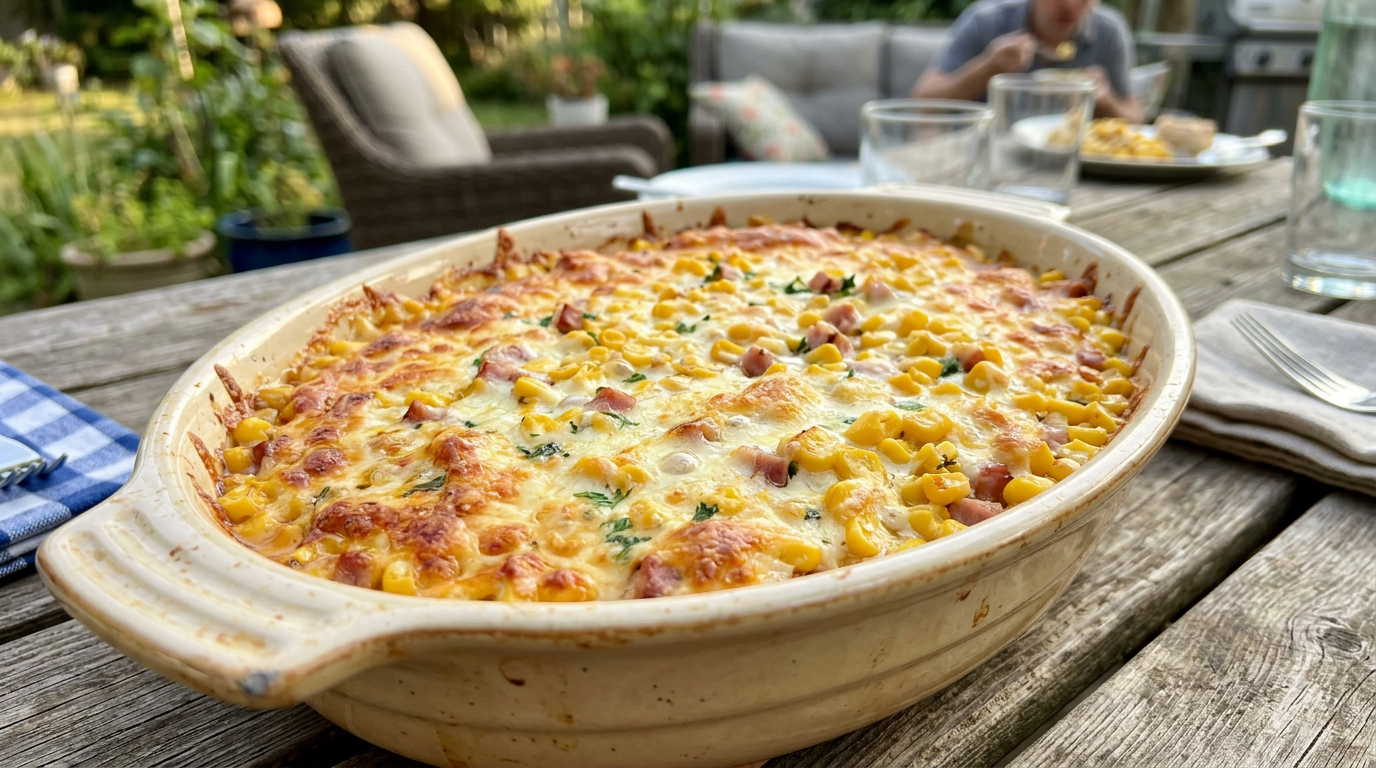
If the beans are the soul of the side game, Cheesy Corn Bake is the crown. This started with the Fiorella family at Jack Stack Barbecue. It’s now a requirement for any KC BBQ meal.
It’s a casserole that mixes sweet corn with a rich cheese sauce. But the ‘KC’ part is the hickory-smoked ham. The ham cuts through the creaminess of the cheese. It makes the dish feel rugged.
The best versions use sharp cheddar and cream cheese. You bake it until the top is bubbling. It’s the perfect match for a rack of ribs. It gives you a creamy contrast to the spice of the meat. In Kansas City, a meal without cheesy corn feels unfinished.
The Craft Resurgence: New Pits, Old Souls
BBQ is always changing. In the last few years, Kansas City has seen a ‘Craft’ resurgence. New pitmasters are challenging the old ways while respecting the roots.
Spots like Harp Barbecue and Chef J BBQ are leading the way. They use 1,000-gallon steel Offset Smokers. These outdoor pits have more airflow than the indoor brick pits of the past. This results in a cleaner fire and a more structured Bark.
These new pitmasters focus on the quality of the meat. They use prime beef and let the meat speak for itself. They use less sauce than the old-school joints. It’s a mix of Kansas City inclusivity and modern craft techniques. It’s a great time to be eating BBQ in this city.
Fusion Frontiers: The Future of KC BBQ
The next step for the KC style is fusion. The most exciting spot right now is Buck Tui BBQ. Chef Ted Liberda mixes Northern Thai flavors with KC smoke.
Liberda realized that hickory-fired brisket pairs well with Thai spices. His menu has brisket brined for 72 hours. He serves ‘Heavenly Pulled Pork’ with a spicy Tiger Cry sauce.
Buck Tui shows the future of the KC ‘Melting Pot.’ It proves that the foundation of wood and smoke can work with any flavor. As long as we keep the low and slow method, the traditions will keep growing.
The American Royal Standards: Scoring Your Own Pit
If you want to master the KC style, you need to know how it’s judged. KC is the home of the Kansas City Barbeque Society (KCBS). They set the rules for the whole world.
If you want to score your BBQ like a pro, look at three things:
- Appearance: We want mahogany color and a dry bark. It should look alive, not gray.
- Texture: This is the hard part. For ribs, we want ‘bite-through’ tenderness. The meat should come off where you bite it, but stay on the bone elsewhere. If it falls off the bone, it’s overcooked.
- Taste: It should be balanced. You want meat first, smoke second, and spices third.
Follow these rules, and you’ll be the king of the backyard. The Kansas City Blueprint is a high standard, but it’s worth the work.
Keep the fire steady and the drinks cold. I’ll see you at the pit.
— Big B