How to Rest and Hold Brisket Without Drying It Out
Big B’s Quick Hits (TL;DR)
- Pull on feel: Probe tender usually lands around 200°F to 205°F (93°C to 96°C). The number is a clue, not a finish line.
- Rest wrapped: Keep the wrap on for 1 to 4 hours before you slice. Hot meat on a board dumps juice.
- Hold warm, not hot: For a party, park it around 150°F to 170°F (66°C to 77°C). Stay above 140°F (60°C) for food safety.
- Don’t unwrap early: Steam escape and cold air are how flats turn into jerky.
Why the Rest Matters
You can run a clean fire for twelve hours and still wreck the brisket in the last thirty minutes. The cook does not end when you pull it. It ends when you slice it.
While the meat sits wrapped, juices that got shoved toward the center during the cook move back through the muscle. Connective tissue that was still tightening up keeps relaxing into gelatin. Slice too early and you get a pink puddle on the board and a dry flat in the sandwich.
Big B’s Take: I treat rest and hold as part of the cook plan, not a bonus if I have time. If guests are coming at 6, I want the brisket off the pit by early afternoon so it can sit.
If you still need the full start-to-finish method, start with Brisket 101. This post picks up at the probe.
When to Pull
Forget chasing one magic number. You are looking for probe tender. Slide an instant-read into the thickest part of the flat. It should go in with almost no resistance, like warm butter. Most packers get there between 200°F and 205°F (93°C to 96°C), but I have pulled at 198°F (92°C) and waited until 208°F (98°C) when the flat was still tight.
Check a few spots. The point is forgiving. The flat will lie to you if you only poke the soft end.
Carryover cooking still happens after you leave the pit. A tightly wrapped brisket can climb a few degrees in a cooler. That is normal. It is also why I do not panic if I pull a hair early when the probe already feels right.
You already fought the stall and chose a wrap. Keep that wrap on for the rest. If you are still deciding between foil and paper, read foil vs butcher paper. For resting, breathable peach paper is my default because it protects the bark better than a steamy foil pouch.
The Short Rest (1 to 4 Hours)
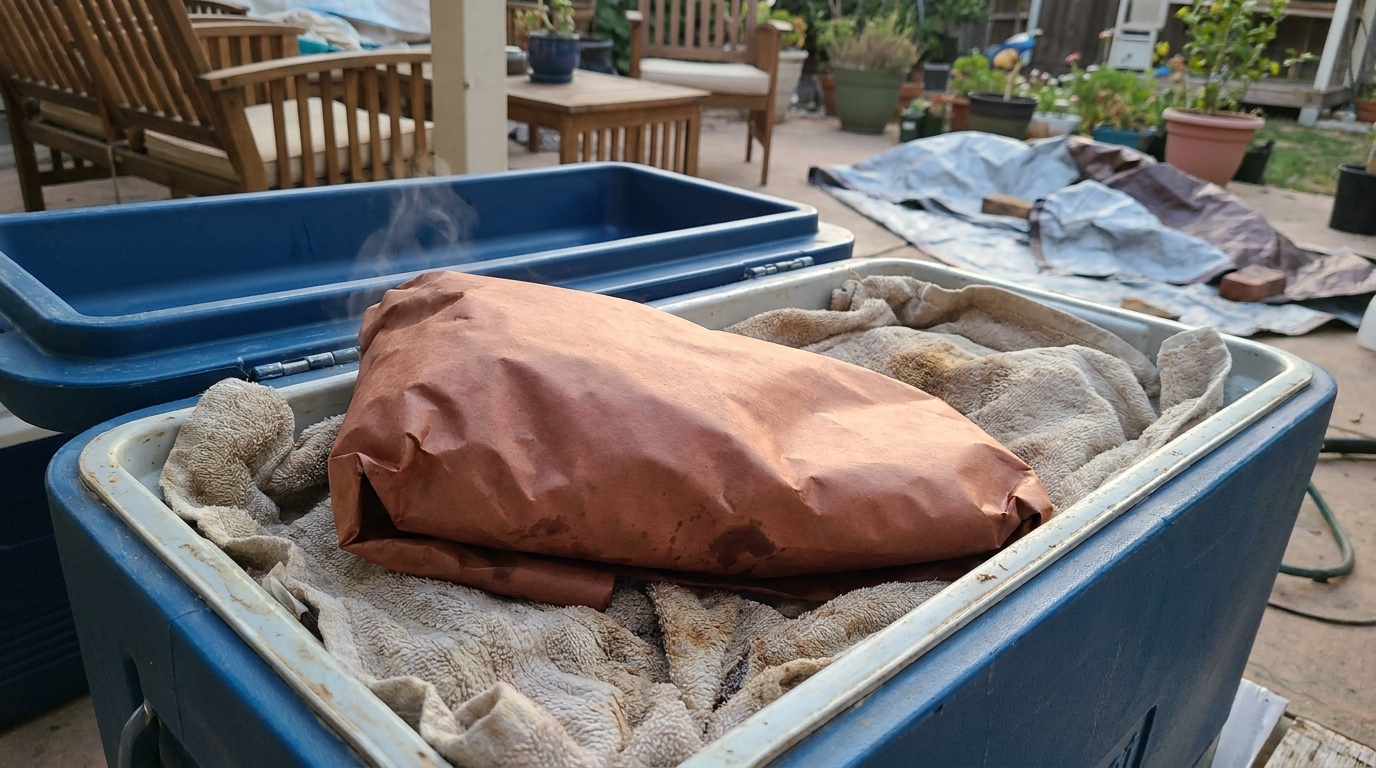
Leave the brisket wrapped. Set it in a dry cooler lined with towels. No ice. Close the lid.
One to two hours is the minimum I like before slicing. Three to four hours is better when you can spare it. The meat stays hot enough to serve, and the texture settles.
If the wrap is swimming in liquid after a long foil cook, crack it for thirty seconds to vent hard steam, then close it again. You want moisture in the meat, not a soggy bark bath.
Skip the cooler if you are eating soon and the kitchen is warm. A towel nest on the counter still beats slicing straight off the grate.
The Long Hold (Party Timing)
This is how you feed people on a schedule without serving a cold brick.
Low oven: Set the oven to 150°F to 170°F (66°C to 77°C). Put the still-wrapped brisket in a pan and hold it there. Stay above 140°F (60°C) for food safety. Stay under about 170°F (77°C) so you are holding, not slowly overcooking the flat into shreds.
Faux cambro: Cooler, towels, wrapped meat. Same idea as the short rest, stretched longer. Check that the internal temp is still in a safe warm zone if you are going past a few hours. A leave-in probe through the wrap helps if you are nervous.
Overnight: Plenty of backyard cooks rest overnight in a warm hold. Plan your fire so the brisket finishes the night before or early morning. Do not fridge a whole hot packer and then try to resurrect it at noon. Cold storage is for leftovers after you slice.
Big B’s Take: Holding too hot is the quiet killer. An oven at 200°F (93°C) feels “safe,” but it keeps cooking. You end up with dry edges and a bark that tastes tired.
Mistakes That Dry the Flat
Slicing hot off the pit. The board turns into a soup bowl. The meat looks done. Then the sandwiches need sauce just to chew.
Unwrapping for a photo. Bark looks great for Instagram. Moisture leaves with the steam. Wrap it back up and give it time.
Holding unwrapped. Air is the enemy. Keep paper or foil on until you are ready to carve.
Panic reheat from the fridge. If you chilled the whole thing, warm gently while still wrapped. High heat to “catch up” finishes the flat for good.
Ignoring the flat. The point can take abuse. The flat cannot. Probe and hold decisions should protect the lean side.
Slice After the Hold
When you finally open it, work against the grain. Start on the flat with pencil-thick slices. When you hit the point, the grain turns. Rotate and keep slicing so every piece has bark and a little fat.
If you planned burnt ends, separate the point before you slice the flat for the tray. That finish gets its own walkthrough in burnt ends at home. For a normal slice tray, rest and hold are the whole game.
A good rest shows up on the board. Juice stays in the slice. Bark still has bite. Guests think you are a genius. You know you just waited.
Keep the fire steady and the drinks cold. I’ll see you at the pit. - Big B
Keep the Fire Burning
Burnt Ends at Home from a Packer Brisket
Separate the point, cube it, sauce it, and run a second smoke so you get candy-like burnt ends in the backyard.
Read GuideSouth Texas BBQ Rubs: The Secret Power of Cumin and Coarse Spices
Break the salt and pepper rules. Learn why South Texas pitmasters use bold aromatics and coarse grinds to build a bark that stands up to the desert heat.
Read GuideThe Art of Low and Slow: Smoked Brisket 101
Step-by-step brisket selection, trimming, fire temps, wrap timing, and the rest that keeps the flat juicy.
Read Guide