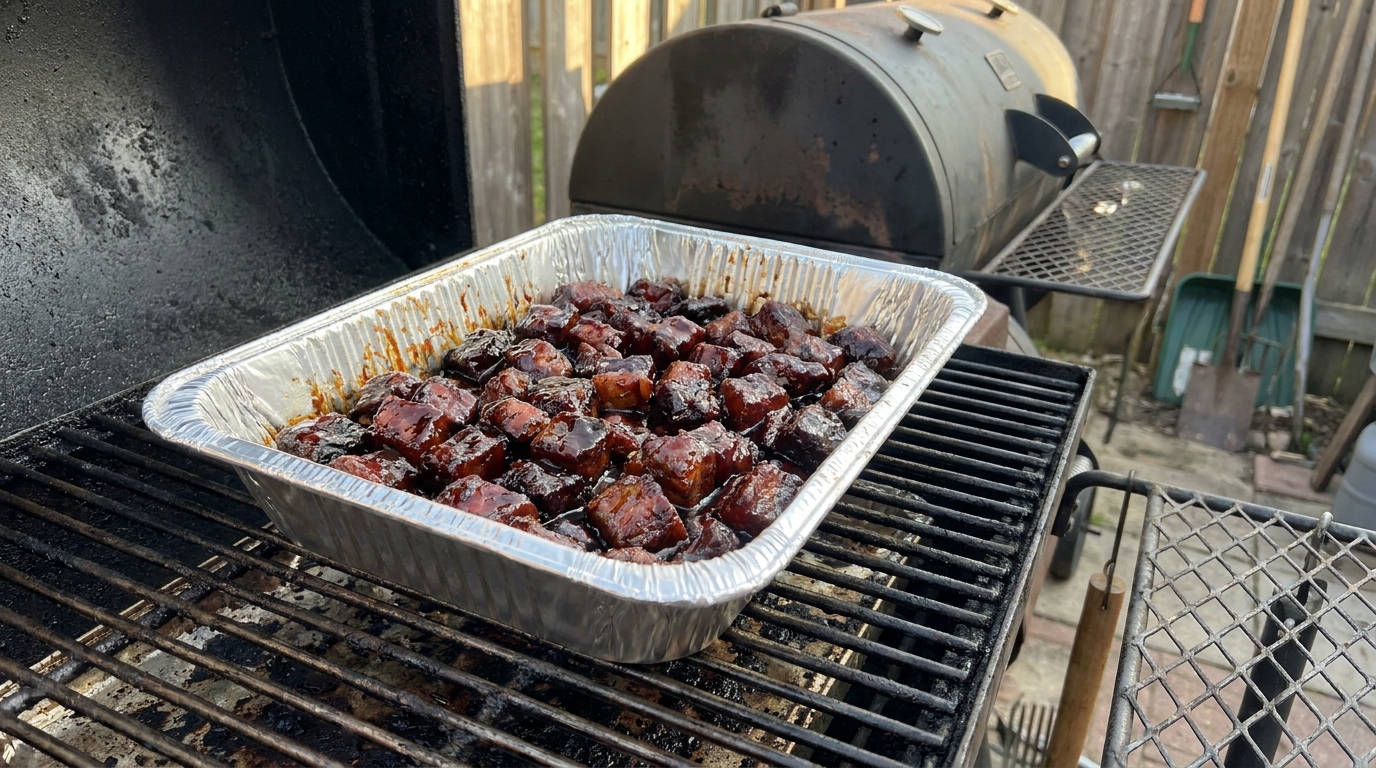
Burnt Ends at Home from a Packer Brisket
Big B’s Quick Hits (TL;DR)
- Start with a finished packer: Cook the whole brisket first. Burnt ends are a second act for the point.
- Cube about 1 inch: Toss with more rub and a thick sauce so every side gets sticky.
- Second smoke: 225°F to 275°F (107°C to 135°C) for about 1 to 2 hours until the cubes are tender and lacquered.
- Wood: A hickory and oak mix fits the Kansas City profile.
What Burnt Ends Actually Are
Burnt ends used to be scraps. Pitmasters tossed the crunchy, fatty bits from the brisket point to folks in line. Then demand flipped the script. In Kansas City they became the main event: cubes of point smoked twice, sauced, and taken to candy territory.
You are not making leftover tips. You are finishing the fattier half of the packer on purpose.
For the style context, skim the Kansas City BBQ blueprint. This post is the backyard practice version. History lives over in the KC history guide if you want the Calvin Trillin story.
Start with a Finished Packer
Run the whole brisket like you mean it. Trim, rub, clean smoke, wrap, cook to probe tender. If you need the full path, use Brisket 101.
Do not rush the first cook hoping the second smoke will fix a tough flat. Burnt ends save the point. They do not rescue a bad fire.
Some cooks smoke a point-only cut from the butcher. That works. Same second-smoke steps. You just skip the separation.
Pull the packer when the flat probes tender, usually near 200°F to 205°F (93°C to 96°C). Rest it wrapped for at least an hour so you can handle it without painting the cutting board. A longer rest is fine. You are about to put the point back on heat anyway.
Separate Flat and Point
Set the brisket fat-cap orientation however you trimmed it, and find the seam between flat and point. It is a natural line of fat and muscle. Use a sharp knife and follow that seam. You want two pieces: a leaner flat for slicing, and a thicker, marbled point for cubes.
Trim off any huge hard fat pockets from the point that will never render. Leave the good marbling. That fat is why burnt ends eat like meat candy.
Slice the flat for the tray or wrap it and hold it warm. The point goes to the cutting board for cubing.
Cube, Season, Sauce
Cut the point into roughly 1-inch cubes. Too small and they dry out. Too big and the centers stay soft while the edges burn in sauce sugar.
Toss the cubes in a little more of your rub so the fresh-cut faces get seasoning. Then add a thick Kansas City-style sauce. You want coating, not soup. Molasses-heavy sauce sticks and sets into a shell during the second smoke.
Spread the cubes in a single layer in a disposable pan or a sturdy sheet pan. Crowding steams them. Give the smoke a path between pieces.
Big B’s Take: Sauce goes on before the second smoke for classic sticky ends. If you prefer a dryer bark bomb, run 45 minutes dry with rub only, then sauce for the last stretch. Both are honest. Pick the texture you like.
The Second Smoke
Get the pit to 225°F to 275°F (107°C to 135°C). I usually sit nearer 250°F (121°C). You want enough heat to render remaining collagen into gelatin and to set the sauce without turning the sugar bitter.
Use clean smoke. A hickory and oak blend matches the KC habit. Keep the fire from billowing. Dirty smoke on already-finished beef is a mean trick.
Park the pan on the grates. Leave it alone for a bit. Stir or flip once if one side of the pan runs hotter. You are looking for cubes that are probe-soft, sticky on the outside, and deep mahogany. Most pans land in the 1 to 2 hour window. Start checking at 60 minutes.
If the sauce looks wet and pale, give it more time. If the edges are black and harsh, you went too far or the fire was dirty. Pull them.
The bark on the original outer faces should still taste like brisket. The cut faces should taste like glazed smoke.
Serve and Store
Serve burnt ends hot. They cool into sticky bricks if they sit too long on a cold tray. A short hold in a warm oven (around 150°F / 66°C) in the covered pan is fine for a party.
Leftovers keep in the fridge a few days. Reheat gently covered so the glaze does not scorch. They also disappear cold out of the container at midnight. No judgment.
If you cooked a whole packer, you now have sliced flat for sandwiches and a pan of ends for the people who hover by the pit. That is the KC backyard plate without opening a restaurant.
Keep the fire steady and the drinks cold. I’ll see you at the pit. - Big B
Keep the Fire Burning
How to Rest and Hold Brisket Without Drying It Out
Pull temps, cooler rests, and overnight holds so your brisket stays juicy from the pit to the cutting board.
Read GuideThe Kansas City BBQ Blueprint: Techniques, Tastes, and the Modern Pit
KC wood blend, bark and sauce timing, and the double-smoke burnt end method for the backyard pit.
Read GuideThe Art of Low and Slow: Smoked Brisket 101
Step-by-step brisket selection, trimming, fire temps, wrap timing, and the rest that keeps the flat juicy.
Read Guide