The Foil Boat Strategy: Why Your Brisket Bark Deserves to Breathe
🔥 Big B’s Quick Hits (TL;DR)
- Protect the Bottom, Free the Top: The foil boat shields the meat from direct heat while letting the bark continue to develop.
- The Confit Effect: As the fat renders, the meat sits in a small pool of its own juices, keeping it incredibly tender.
- Time it by Temperature: Launch the boat when your bark is set, usually between 165°F (74°C) and 175°F (79°C).
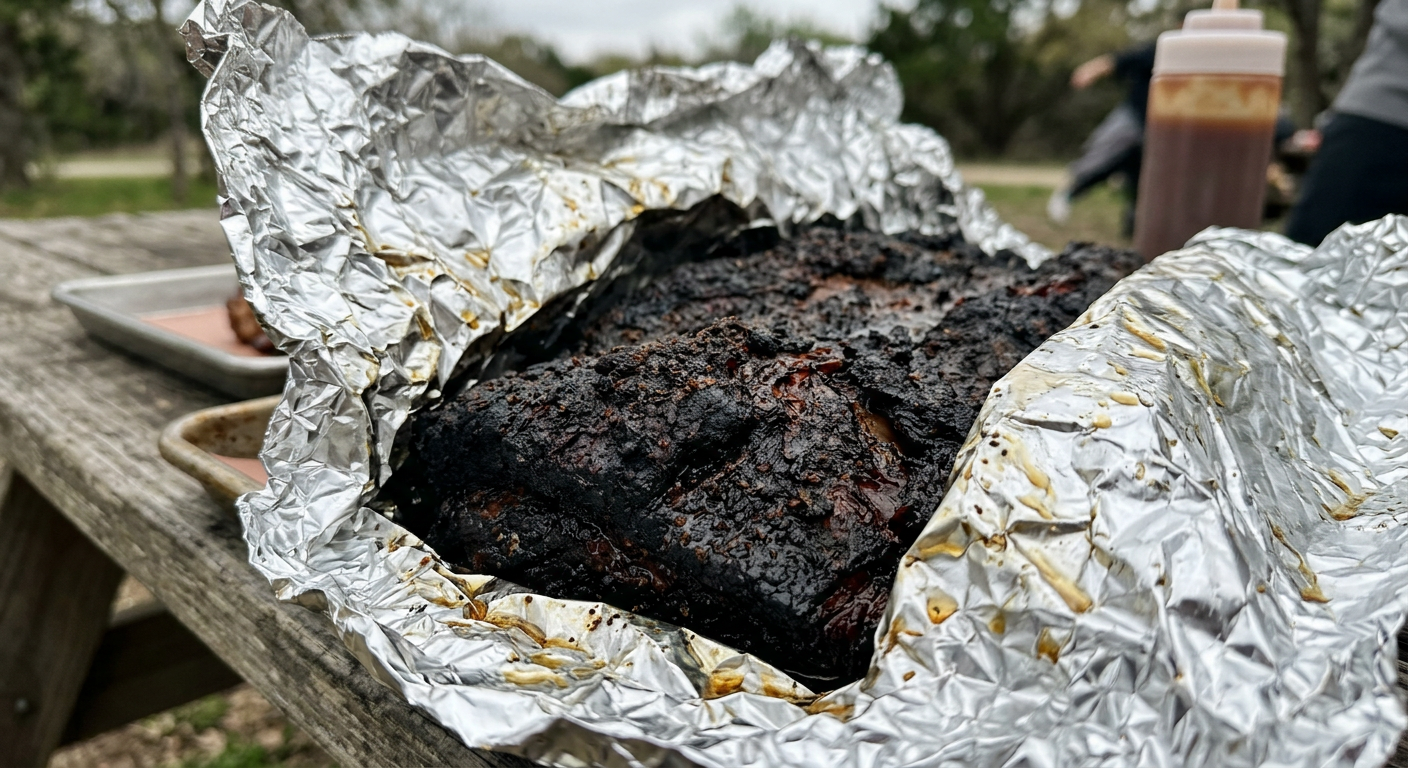
I spent years being a purist when it came to wrapping. In my early days, I was a foil guy. I’d pull that brisket off the pit, wrap it tight like a shiny silver burrito, and let it steam until it was tender. But the bark always suffered. It turned into a soggy, mushy mess that lacked that legendary crunch. Then I switched to peach butcher paper, which helped the bark but sometimes left the bottom of the flat a little too dry for my liking. It felt like I was always making a trade-off.
Then I saw a few of the big-name Texas pitmasters doing something that looked like a mistake. They were building “boats” out of foil, leaving the top of the meat completely exposed while the bottom was nestled in a silver cradle. I tried it on a pork shoulder first, thinking if I ruined it, I wouldn’t be out too much money. When that shoulder came off with the best bark I’d ever seen and a bottom that was practically confit in its own fat, I knew I’d found the middle ground. The foil boat is not just a gimmick; it’s a strategic play for anyone who refuses to settle for mediocre bark.
What is the Foil Boat? (The Physics)
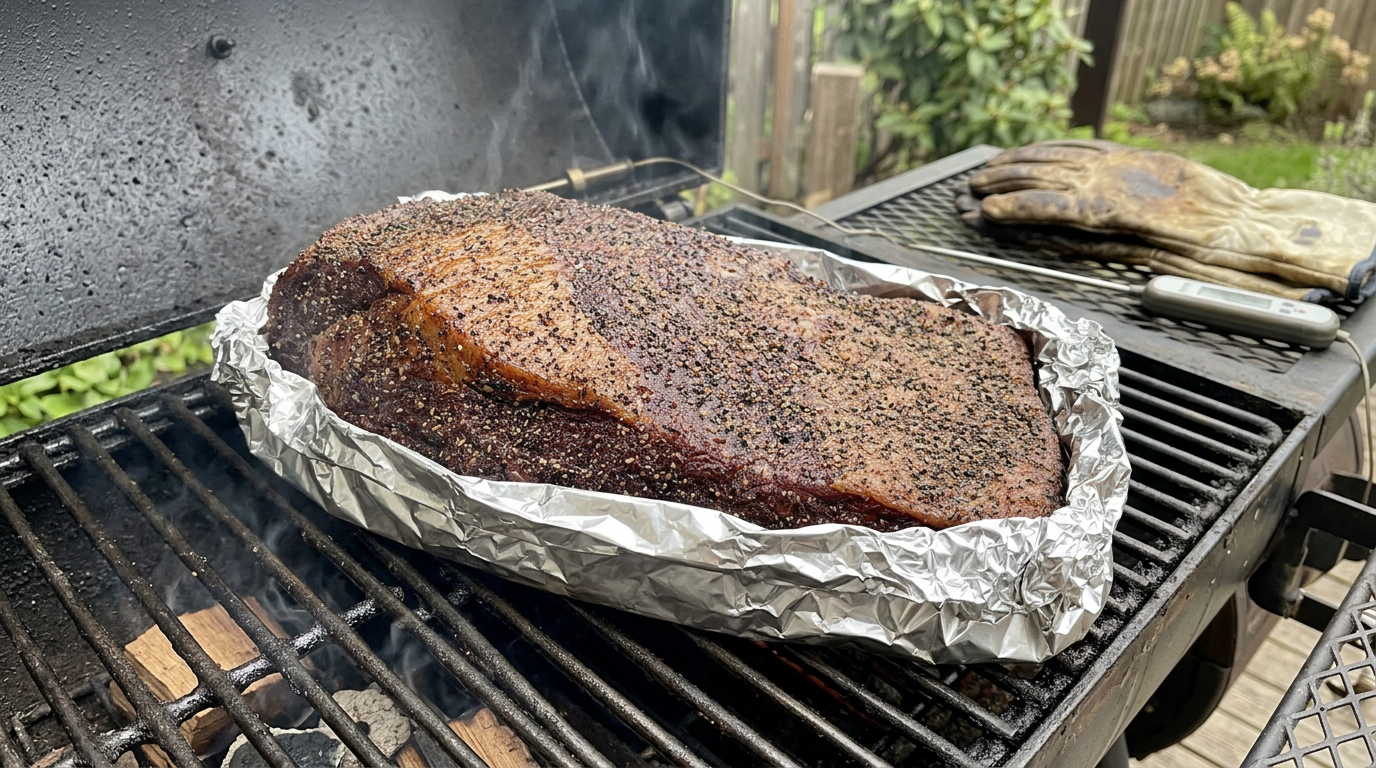
The foil boat is exactly what it sounds like: a tight-fitting, silver cradle that holds the bottom of your brisket or pork shoulder while keeping the top exposed to the smoke. It works on the principle of bottom-up protection. On most offset smokers and charcoal pits, the heat source comes from underneath the grates. This direct heat can easily dry out the bottom of a large cut of meat during a 12-hour smoke. By building a boat out of heavy-duty foil, you create a thermal shield that keeps the bottom and the sides from getting scorched.
But the real magic of the boat happens inside that silver cradle. As your meat cooks, the fat begins the process of rendering. Instead of that fat dripping off into the bottom of the pit, it collects in the bottom of the foil boat. This means the bottom half of your brisket is essentially cooking in a shallow pool of its own rendered fat and juices. Pitmasters call this the “confit effect.” It ensures that the most vulnerable part of the meat stays incredibly moist and tender through the entire process.
While the bottom is being protected, the top of the meat is still sitting in the airflow of the smoker. It isn’t being steamed like it would be in a full foil wrap. This allows the bark to continue to develop, darken, and set even after you have “boated” the meat. This is how you survive the-stall without sacrificing that crunchy exterior we all work so hard to build. It’s a simple shift in physics that changes the entire outcome of your cook.
Bark is King: Why the Boat Beats the Wrap
In the world of BBQ, the bark is the ultimate prize. It’s that dark, crunchy crust that holds all the flavor of your spice rub and the kiss of the smoke. When you do a full wrap with foil, you are essentially creating a small steam room for your meat. That steam is the enemy of bark. It softens the crust, dissolving the hard work you put in during the first six or seven hours of the cook. This is why a traditional foil wrap often leads to what people call “pot roast” BBQ.
The foil boat fixes this by keeping the top of the meat open to the elements. Since the top is exposed, the moisture that evaporates from the meat can escape freely. It doesn’t get trapped against the surface and turn into steam. This means your bark stays crunchy and continues to build even more depth of color as you push towards the finish line. If you are a fan of that deep mahogany look, the boat is your best friend. For a deeper look at the trade-offs, see my guide on Foil vs. Butcher Paper.
Another huge advantage of the boat is how it handles the fat cap. If you cook with the fat cap up, as many do on an offset smoker, the heat from the top continues to render that fat down. Because the fat isn’t being boiled in a pool of trapped steam, it develops a better texture and flavor. It becomes butter-soft and translucent rather than rubbery. This is a subtle detail that really separates a good backyard brisket from a competition-level masterpiece.
When to Launch the Boat?
The timing of when you build your boat is just as critical as how you build it. If you do it too early, you won’t have enough bark development. If you do it too late, the bottom of the meat might already be getting dry or scorched. The sweet spot usually lands between 165°F (74°C) and 175°F (79°C). This is often right in the middle of the stall, when the evaporation from the meat matches the heat from the cooker and your internal temperature levels off.
But don’t just go by the thermometer. You need to look for visual cues too. Your bark should be set. This means if you gently scratch the surface with your finger, the crust doesn’t just slide off like wet paste. It should feel firm and look dark. You also want to see that the fat cap is starting to soften and render. If the fat still feels hard and opaque, give it another 30 minutes before you launch the boat.
Once those two conditions are met, it’s time to bring that meat inside and build the cradle. Whether you’re working on a Smoked Brisket 101 or an Overnight Pork Butt, the principle is the same. You’ve done the work of building the flavor and the crust. Now you’re building the protection that will carry you through to the finish.
Step-by-Step: Building the Boat
Building a good boat is not rocket science, but it does require a little bit of backyard engineering. You want to use two layers of heavy-duty aluminum foil. The extra layer is important because it provides structural strength and prevents the boat from tearing when you move it back onto the pit. Lay out two sheets of foil that are about six inches longer than your meat on each side. Place your brisket or pork shoulder right in the center.
The goal is to crimp the edges of the foil up to the sides of the meat. You want a tight fit. Crimp the foil until it is snug against the sides, but make sure the top remains completely open. This creates that “cradle” that will catch the rendered fat. If you are smoking a brisket, you want the boat to come up just to the top of the flat and the point. This will protect the bottom from the heat while letting the fat cap continue to render.
For an extra boost of flavor, some people like to add a bit of “boat juice.” You can pour a small amount of beef tallow or even a little bit of apple cider vinegar into the bottom of the boat before you slide it back onto the smoker. This will help with that confit effect and keep the bottom of the meat even more moist. Once your boat is built and tight, slide it back onto the smoker and continue the cook until the meat is probe-tender.
Conclusion: The Final Verdict
BBQ is all about finding the balance between tradition and technique. The foil boat is the perfect example of that. It takes a traditional material like aluminum foil and uses it in a way that respects the science of airflow and bark development. Whether you’re a seasoned pitmaster or a beginner just starting your first 12-hour smoke, the boat is a tool you need in your arsenal.
It’s versatile, it’s effective, and it’s almost foolproof. It gives you the peace of mind that your meat isn’t drying out while also giving you the bark that will make you the hero of the next neighborhood cookout. So the next time you hit the stall and you’re reaching for the butcher paper, give the boat a try instead. Trust me, your bark will thank you. I’ll see you at the pit!
Keep the Fire Burning
The Great Wrap Debate: Foil vs. Butcher Paper
Big B breaks down the difference between the Texas Crutch and peach butcher paper so you can decide which one is right for your next long cook.
Read GuideSouth Texas BBQ Rubs: The Secret Power of Cumin and Coarse Spices
Break the salt and pepper rules. Learn why South Texas pitmasters use bold aromatics and coarse grinds to build a bark that stands up to the desert heat.
Read GuideThe Science of the Pellicle: Why Your Smoked Salmon Needs to be "Tacky"
Stop guessing if your salmon is ready for the smoker. Big B explains the science of the pellicle, why it's the secret to smoke adhesion, and how to get that perfect "tacky" finish every time.
Read Guide