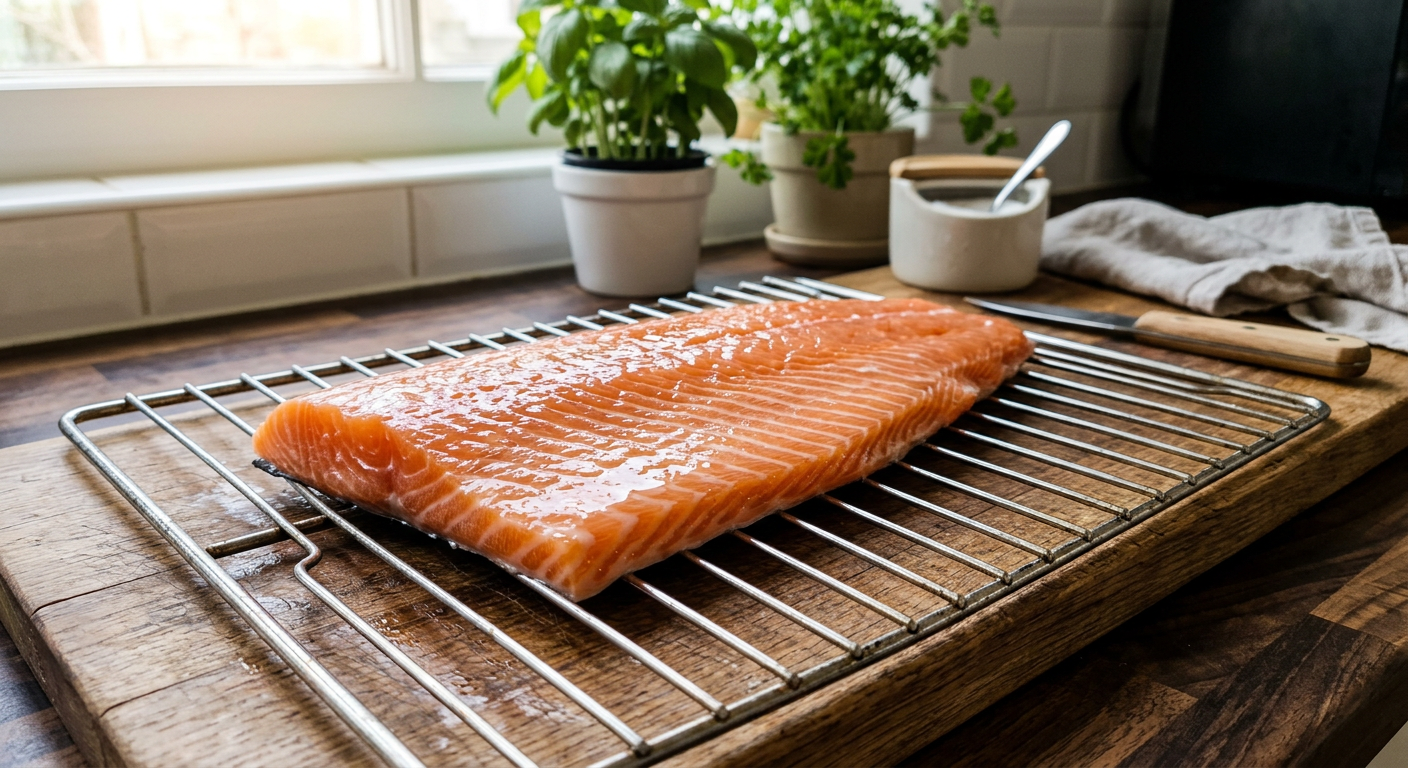
The Science of the Pellicle: Why Your Smoked Salmon Needs to be "Tacky"
🔥 Big B’s Quick Hits (TL;DR)
- Pellicle is a Sticky Trap: It is a thin layer of dried proteins that catches and holds onto smoke particles.
- Air is the Secret Ingredient: You need 4 to 12 hours of uncovered air-drying in the fridge after you finish the brine.
- The Fingerprint Test: If your finger sticks slightly to the surface of the fish without leaving a wet mark, it is ready for the pit.
I remember the first time I tried to smoke a side of salmon. I spent all night brining it in a salt and brown sugar bath. I was so excited to get it on the wood that I pulled it out, gave it a quick rinse, and tossed it straight onto the grates of my offset. Big mistake. That fish came off looking sweaty and gray. It had zero smoke flavor and a bunch of weird white blobs on the surface. It was a mess. What I did not know then was that I had skipped the most important part of the process. I had ignored the pellicle.
The pellicle is not just a fancy word pitmasters use to sound smart. It is the literal foundation of a good smoke. Without that tacky, lacquer-like layer on the surface of your fish, the smoke just has nothing to grab onto. You are basically just heating up fish in a smoky room instead of actually smoking it. Once you understand the science of that sticky skin, your seafood game is going to change forever.
What is a Pellicle? (The Science)
The pellicle is a thin, dry skin that forms on the surface of your meat or fish after it has been brined and air-dried. It is not just dry fish. It is actually a result of protein polymerization. When you brine your salmon, the salt dissolves some of the muscle proteins on the surface. When you then expose that salted surface to moving air, those dissolved proteins dry into a smooth, slightly sticky film. This film is the pellicle.
Think of the pellicle as a sticky trap for smoke. Smoke particles are incredibly small and they are moving fast inside your cooker. If the surface of your meat is too wet, the smoke just bounces off the moisture or slides right off. If the surface is too dry, like leather, the smoke can not penetrate. The pellicle is that perfect middle ground. It is tacky enough to grab those smoke particles and hold them in place so they can flavor the meat.
This is why you can not just wipe your fish dry with a paper towel and call it a day. Wiping it down removes the surface moisture, but it does not give those proteins time to dry and set. You need that 4 to 12 hour window of cold air in the fridge to let the science do its thing. It is during this time that the pellicle forms, turning your salmon from a piece of raw fish into a surface that is primed for brining and smoke absorption.
The Salmon Standard: Why Fish Needs it Most
While you can form a pellicle on a brisket or a pork butt (we often call it the bark setup), it is absolutely critical for fish. This is because of two things: the high protein density on the surface of the fish and a pesky little substance called albumin. If you have ever seen those white, rubbery blobs that squeeze out of a piece of salmon while it is cooking, you have seen albumin.
Albumin is a protein that is liquid when the fish is raw but turns solid when it gets hot. If you cook your fish too fast or without a pellicle, that albumin gets pushed to the surface and creates those unappetizing white spots. A well-formed pellicle acts like a secondary skin. It is a structural seal that helps keep that albumin inside the meat where it belongs. This keeps your salmon looking like a professional product rather than a science experiment gone wrong.
The high protein content in salmon also means that osmosis works very quickly on the surface. When you salt the fish, it immediately starts pulling moisture to the top. Because salmon is relatively lean on the outside, those surface proteins are much more exposed than they are on a fatty cut of beef. This makes fish the perfect candidate for this technique. Without it, you are losing out on both the aesthetic beauty and the depth of flavor that only a long, clean smoke can provide.
How to Build the Perfect Pellicle
Building a pellicle is not hard, but it does require patience. It is the one part of BBQ you can not rush with more heat or a fancy gadget. You simply have to let the air do the work.
First, you need to brine your fish. Whether you use a dry brine of salt and sugar or a wet brine, the goal is to get those surface proteins dissolved. Once your brining time is up, give the fish a thorough but gentle rinse under cold water. You want to wash off the excess salt and sugar crystals so you do not end up with a gritty finish, but do not scrub it. You want those dissolved proteins to stay right where they are.
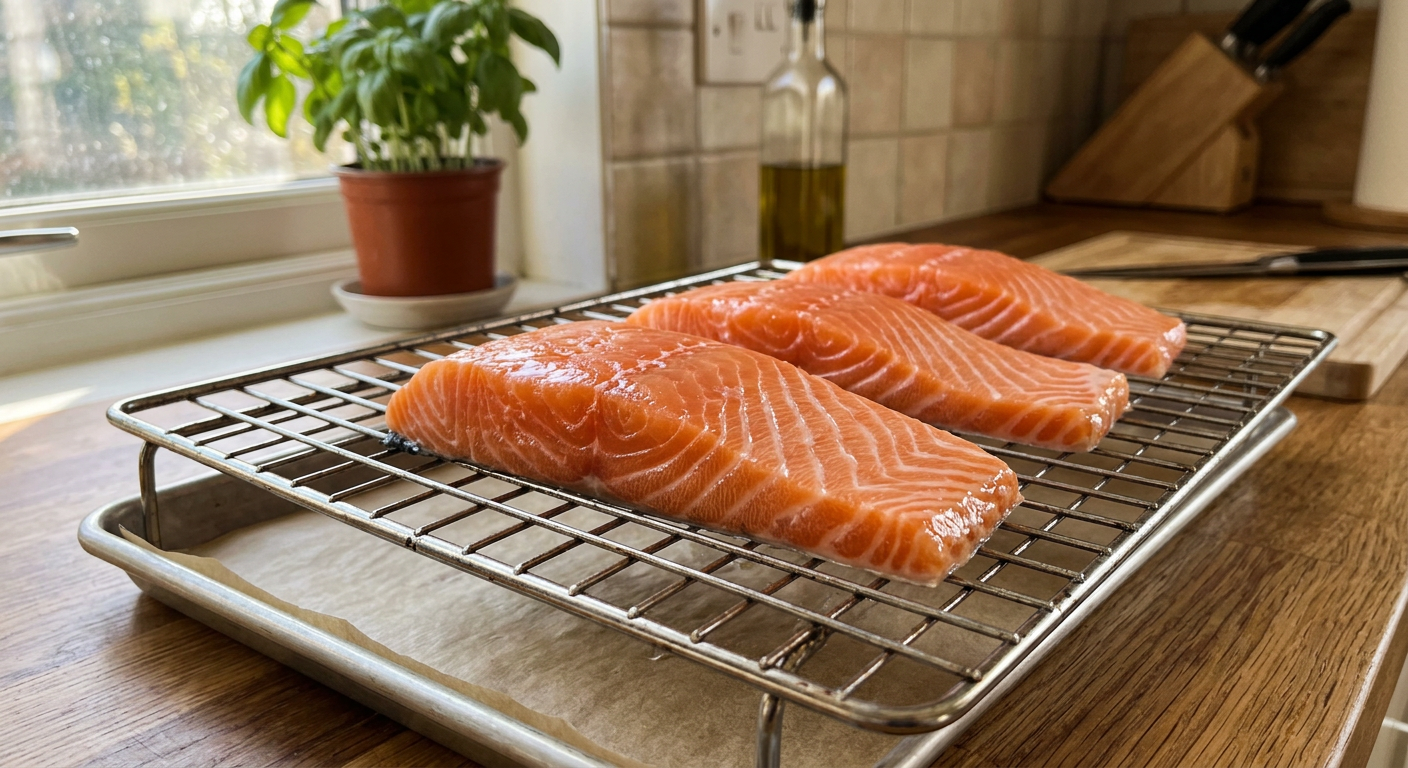
After the rinse, pat the fish dry with paper towels. Get it as dry as you can. Then, place the fillets on a wire rack set over a baking sheet. This is the most important step. Put that tray in the fridge, uncovered, for at least 4 hours. If you have the time, 8 to 12 hours is even better. The cold, dry air of the fridge will circulate around the fish and evaporate the remaining moisture, setting the pellicle. The wire rack is key here because it allows airflow to reach the bottom of the fillet as well.
If you are in a humid environment or you are in a bit of a time crunch, you can use the fan trick. Set up a small desk fan to blow a gentle breeze across the fish while it is in a cool spot. This speeds up the evaporation and can get you a tacky surface in about half the time. You will know it is ready when the fish looks shiny and feels slightly sticky, like the back of a Post-it note. If your finger comes away wet, it is not ready yet. For more on how this salting process compares to other meats, check out my Poultry Brining Guide.
Smoking the Pellicle: Wood and Heat
Once you have that perfect, tacky surface, it is time to get the fish onto the pit. This is where the pellicle really shines. Because the surface is already primed to grab smoke, you do not need a heavy, billowy fire to get great flavor. In fact, for salmon, you want a very clean burn.
The traditional choice for smoking salmon, especially in the Pacific Northwest, is alder. Alder has a delicate, slightly sweet smoke profile that complements the rich oils of the salmon without overpowering it. If you can not find alder, fruitwoods like apple or cherry are excellent backups. They provide a similar sweetness and help develop a mahogany color as the smoke reacts with the proteins in the pellicle.
Temperature management is just as important as wood choice. If you are hot-smoking (aiming for a flaky, cooked texture), you want to keep your pit between 175°F (79°C) and 225°F (107°C). The pellicle will continue to tighten and darken as it takes on smoke. Because the pellicle has already sealed the surface, you can cook at these low temperatures without the fish drying out.
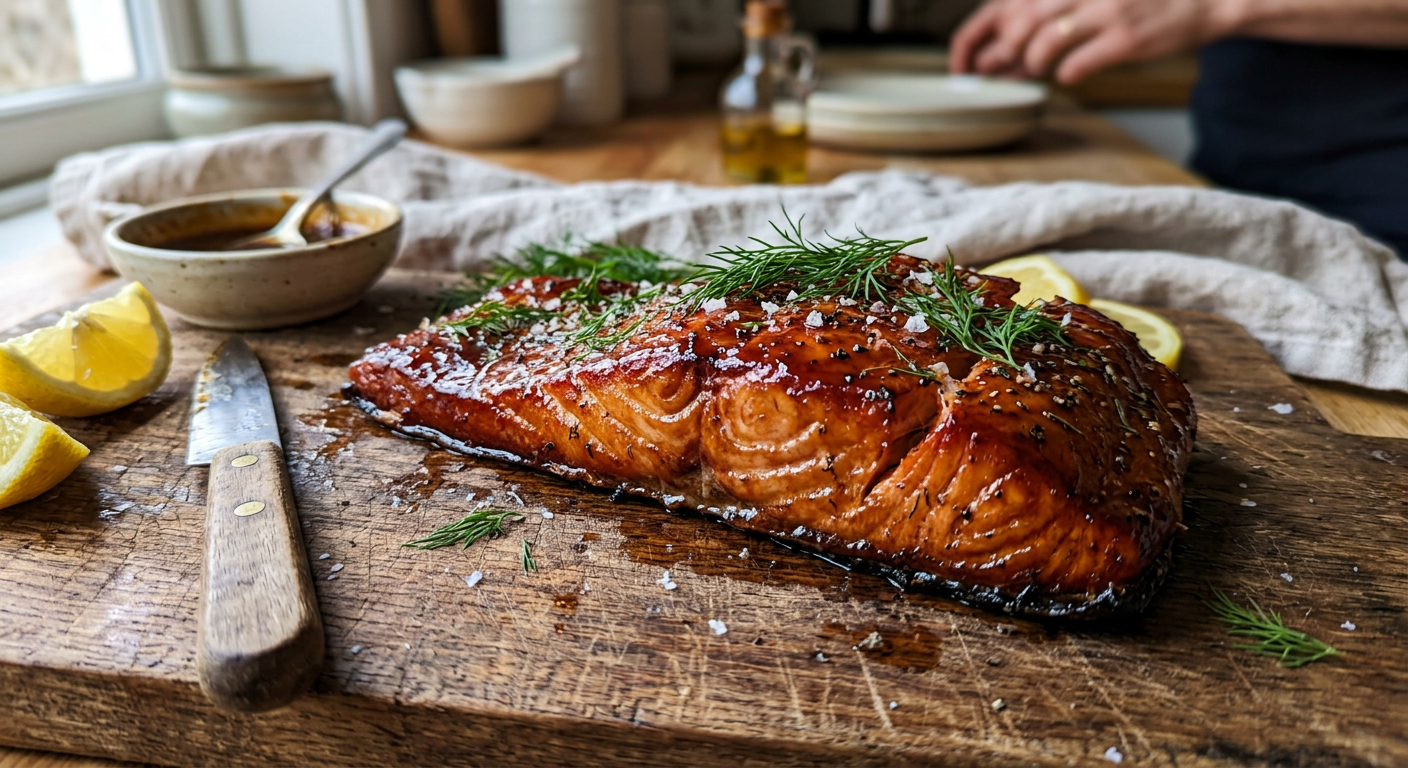
You will see the color change happen right before your eyes. The translucent, shiny surface of the raw fish will begin to take on a golden hue, eventually deepening into a rich, reddish-brown. This is the smoke literally bonding with that protein layer you built in the fridge. It is a beautiful thing to watch, and it is the clear sign that you have done the prep work correctly.
Troubleshooting: Why is it still wet?
If you have followed the steps and your fish is still wet or slimy, do not panic. Usually, the culprit is humidity. If you live in a swampy area or your kitchen is steaming from a big pot of pasta, that air in the fridge might not be dry enough to set the proteins. This is where that desk fan becomes your best friend. Move the tray to a cooler, drier part of the house and give it 30 minutes under the breeze.
Another common issue is the sugar-to-salt ratio in your brine. If you use too much sugar, like a four to one ratio of sugar to salt, the surface can become syrupy. That syrup will stay wet almost forever and can prevent a true pellicle from forming. Stick to a more balanced ratio, usually around two to one or even one to one, to make sure the salt can do its job of dissolving the proteins.
Finally, check your touch. The pellicle should feel like the skin of a balloon or a piece of tape that has been used once. It is tacky, but it should not leave a wet residue on your finger. If it still feels like raw, wet fish, give it more time. There is no such thing as over-drying a pellicle in the timeframe of a single day. Be patient, trust the science, and you will be rewarded with a smoked salmon that looks and tastes like it came from the best smokehouse in the country.
Keep the Fire Burning
The Foil Boat Strategy: Why Your Brisket Bark Deserves to Breathe
The middle ground between wrapping and going naked. Big B explains the foil boat technique, why it saves your bark, and exactly when to deploy it for the perfect brisket and pork shoulder.
Read GuideThe Fire Within: Master Charcoal Management in Your Kettle
Stop fighting your grill and start commanding the coals. Big B breaks down the physics of charcoal, from lighting the first spark to taming the vents for a perfect 12-hour burn.
Read GuideSouth Texas BBQ Rubs: The Secret Power of Cumin and Coarse Spices
Break the salt and pepper rules. Learn why South Texas pitmasters use bold aromatics and coarse grinds to build a bark that stands up to the desert heat.
Read Guide